Last updated November 21, 2026
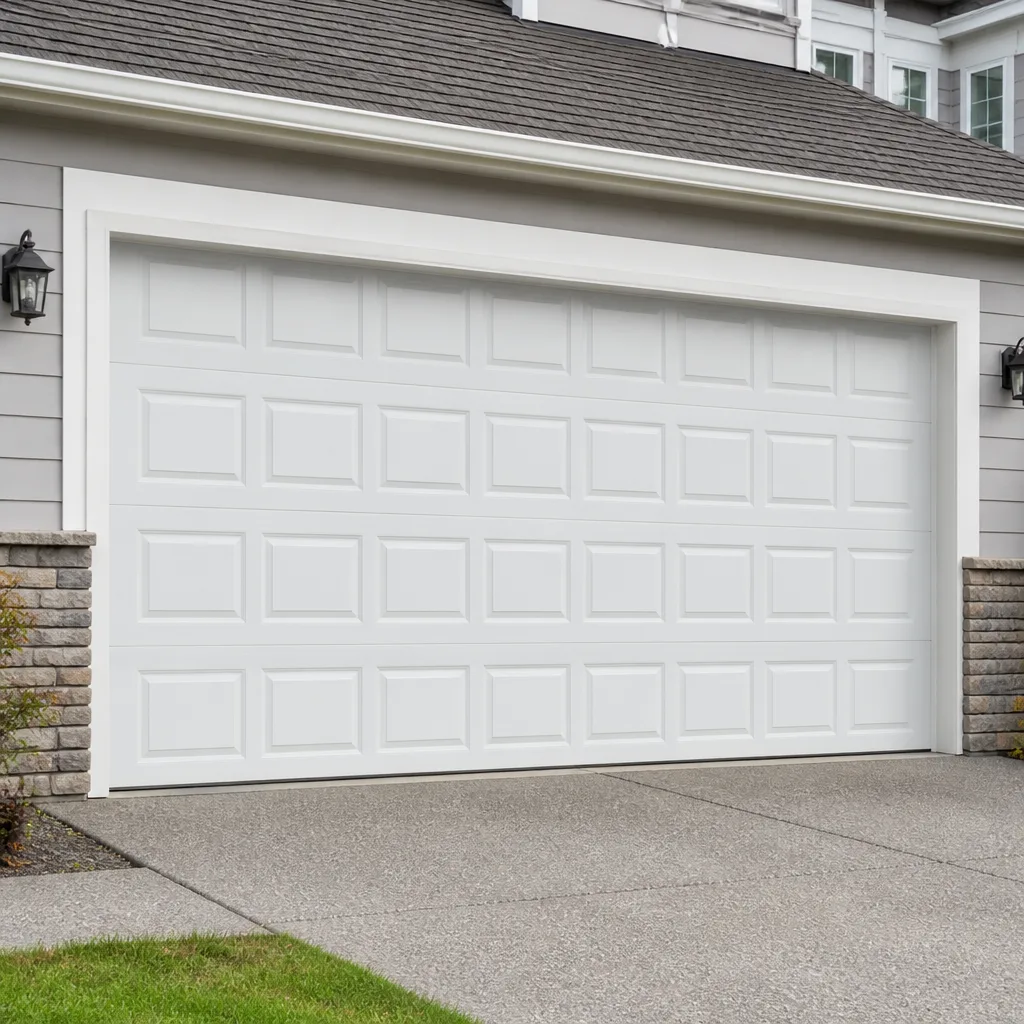 Raised-panel steel
 Carriage house
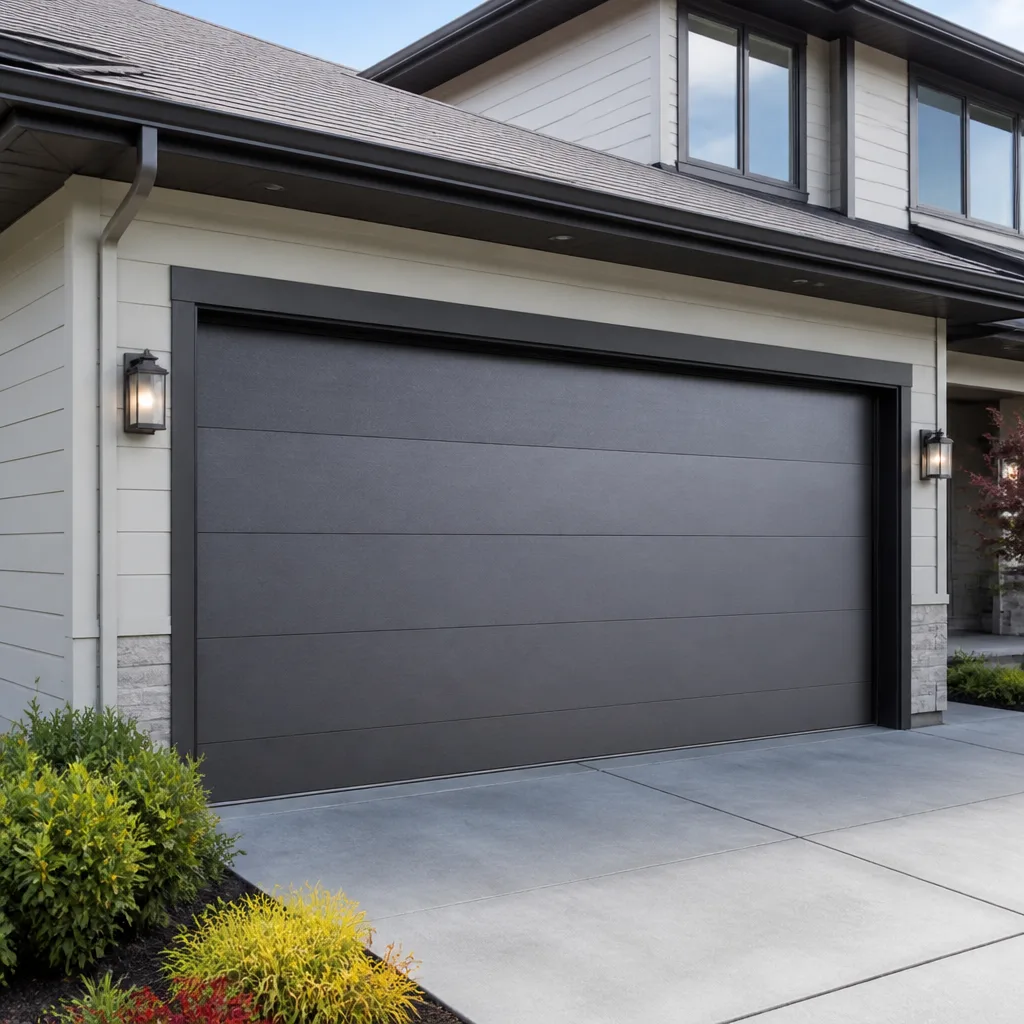 Modern flush
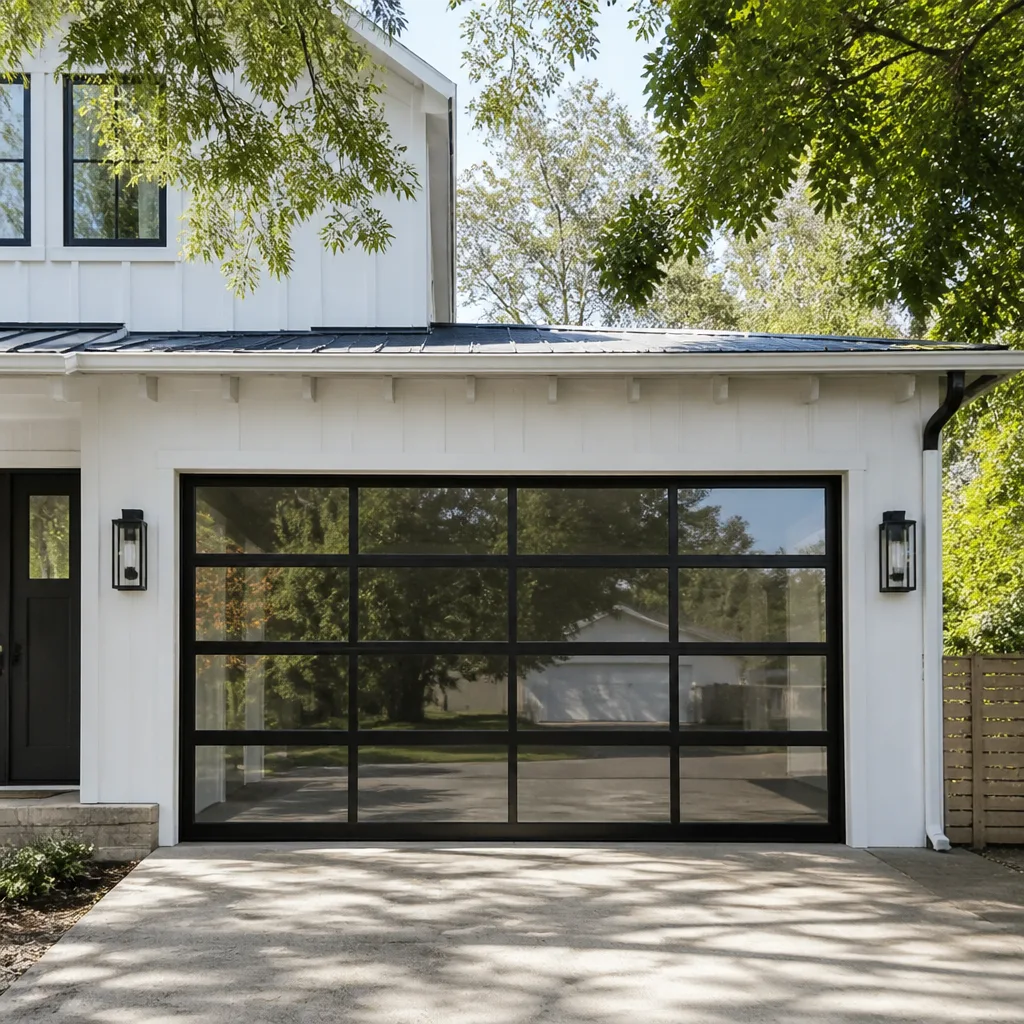 Full-view glass
 LiftMaster openers
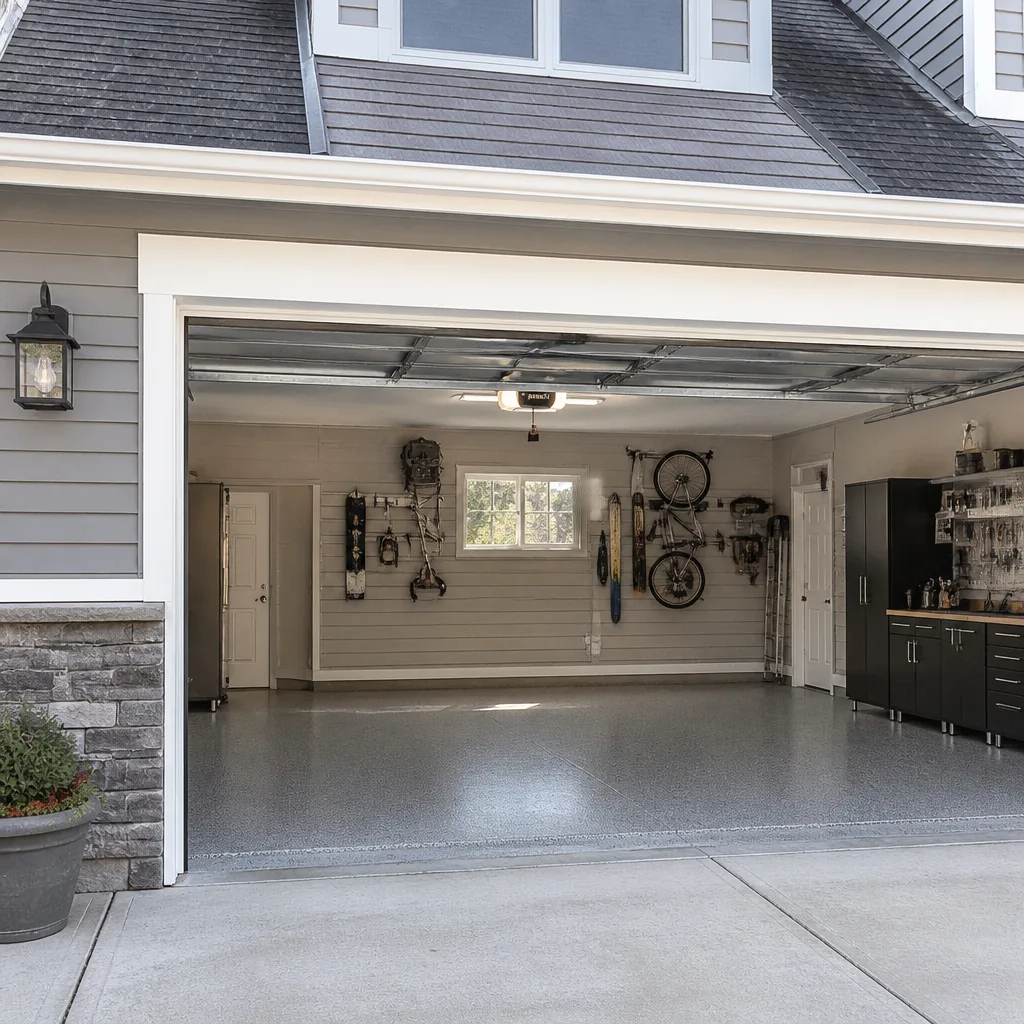 Chamberlain openers
Full 25-point door and opener safety check with every visit - springs, cables, rollers, tracks, and your LiftMaster or Chamberlain opener included
You get a price before we start. It does not change when the pro arrives.
Get your free estimateGarage Door Warning Signs: A Pine Hills Homeowner’s Reference Guide
A garage door that hesitates for two seconds before it moves isn’t “a little slow.” It’s an opener working against a spring that’s losing tension, and in our experience that spring has weeks left, not years. Most garage door failures don’t arrive out of nowhere. They announce themselves through specific sounds, movements, and visual cues that homeowners either miss or misread as normal wear. This guide decodes those signals with enough technical detail to tell a cosmetic nuisance from an imminent failure, and it’s written specifically for the way doors age here in Pine Hills, where heat and humidity have their own ideas about how long a spring, seal, or panel should last. By the end you’ll know what to listen for, what to look at, and when to stop and call someone.
Quick Answer
The most serious garage door warning signs in a Pine Hills home are a sharp bang from the spring area (a broken torsion spring), a door that travels unevenly or won’t stay level when opened halfway (lost spring tension or track misalignment), and a grinding or rhythmic squealing that points to worn rollers or dry bearings. Hesitation, reversing without an obstruction, and a shrinking remote range are opener-side warnings that range from easy firmware resets to failing logic boards. Any sign that touches the springs or cables should be handed to a trained technician rather than tested further.
Styles & brands we work with
- Raised-panel steel
- Carriage house
- Modern flush
- Full-view glass
- LiftMaster openers
- Chamberlain openers
Table of Contents
- How garage doors fail: the three systems that talk to you
- Sound diagnostics: what each noise tells you
- Movement tests: balance, sag, and uneven travel
- The visual checklist: springs, cables, and rollers
- Opener warning signs: firmware or failing hardware?
- Why Florida’s climate changes what fails first
- Brand-specific notes for LiftMaster, Chamberlain, Genie, and Clopay
- Common mistakes to avoid
How Garage doors Fail: The Three Systems That Talk to You
Every garage door is really three systems layered on top of each other, and a warning sign almost always belongs to one of them. Learning to sort a symptom into the right category is most of the diagnostic work. The first is the counterbalance system: the torsion or extension springs, the cables, and the drums that carry the door’s weight. The second is the mechanical track-and-roller system that guides the door up and down. The third is the opener, which is the motor, the logic board, the safety sensors, and the remotes.
Here’s why the sorting matters. A door that feels heavy and sluggish is usually a counterbalance problem, not an opener problem. Homeowners often assume the opener is “getting weak” and ask about replacing it, when the motor is running fine and the spring is the thing giving out. Conversely, a door that slams shut hard or reverses for no reason is usually an opener or sensor issue, even if the door itself looks and sounds fine. The failure signature rarely lies about which system is complaining, as long as you know what you’re listening for.
We work on garage doors across Pine Hills, from single-car doors on older block homes to double doors on newer builds, and the pattern is consistent: the doors that fail suddenly and dramatically are almost always the ones whose slow, quiet warnings went unread for months. The rest of this guide is about reading them. If you reach a point where a symptom involves the springs or cables, that’s the moment to bring in a specialist rather than keep poking at it. Cables under tension and springs under load can release stored energy without warning, and that’s how serious injuries happen.
One more category note before we move on. Some warning signs are cosmetic and can wait. A scuffed bottom panel, a slightly noisy roller, a remote that needs a firmer press, those are annoyances. Others are safety-critical and shouldn’t wait at all: a broken spring, a fraying cable, a door that won’t reverse, a visibly bent track. The guide flags the difference throughout, but this is the line to keep in your head.
Sound Diagnostics: What Each Noise Tells You
Noise is the garage door’s first language, and the type of sound narrows down the failing component faster than almost any visual check. A sharp, sudden bang that sounds like a gunshot from inside the garage is almost always a torsion spring snapping. It’s the loudest warning a garage door gives, and it’s the one homeowners remember. A grinding noise that grows louder as the door travels points to worn rollers or a track that’s out of alignment, metal dragging against metal. A rhythmic squeal or squeak that repeats at a steady interval usually means dry bearings in the rollers or a hinge that’s lost its lubrication.
Here’s a quick decoder you can use the next time something sounds off:
- Sharp bang from above the door: broken torsion spring. Stop using the door. This is the classic spring failure, and it’s a call-a-professional scenario.
- Continuous grinding during travel: worn rollers, a bent track, or debris in the track channel. Can often be repaired without an emergency visit, but should be diagnosed soon.
- Rhythmic squeal or chirp: dry bearings or hinges. Sometimes a lubrication issue, sometimes a sign the rollers are past their service life.
- Rattling or clunking: loose hardware, a worn hinge, or a panel that’s coming loose from its section.
- Popping near the opener: a loose chain or belt, or the opener’s trolley catching on a worn section.
- Buzzing that stops before the door moves: an opener that’s trying to engage but can’t, often a stripped gear or a failed capacitor.
The bang-and-grind distinction is the one we emphasize most, because the response to each is completely different. A broken spring means the door is now being held up by the opener alone or, worse, nothing at all, and running it risks dropping the door or damaging the opener. A grinding track is a repair that can be scheduled. If you’re hearing a sharp bang, don’t cycle the door again to “see if it still works.” Call us and we’ll treat it as what it is.
One useful habit: listen for the noise when the door is under load, meaning at the start of travel when the spring is doing the most work. A squeal that only appears in the first few seconds is usually bearings. A grind that appears throughout the travel is usually track or rollers. The timing tells you where to look.
Movement Tests: Balance, Sag, and Uneven Travel
Movement is the second language, and there’s one test worth doing safely: the balance test. Disconnect the opener (most openers have a manual release cord or lever) and lift the door about halfway by hand, then let go. A door in good balance should hold roughly where you left it. A door that sinks or falls is losing spring tension. A door that’s very hard to lift by hand is also a counterbalance problem, typically a spring that’s lost tension or a cable that’s come off its drum. Never force a door that feels much heavier than usual; put it back down gently and call for help. This test only applies to the door, not the springs or cables themselves, which you should leave untouched.
Beyond balance, watch how the door travels. The following are the movement warnings we see most often, and what each typically means:
- Hesitation before the door moves. Often the opener pushing against a slack or weakening spring, or a worn gear in the opener. Points to the counterbalance system first.
- Jerking or stuttering during travel. A dry or worn roller, a track that’s slightly out of alignment, or a hinge starting to bind.
- Sagging on one side. A cable issue, a spring that’s lost tension, or a track that’s pulled away from the wall. For a double door, this often shows as one side riding lower.
- Uneven travel from side to side. Track misalignment or one side’s rollers being far more worn than the other.
- The door reverses before reaching the floor. Could be the safety sensors, an obstruction, or an opener force setting that’s drifted. Don’t keep forcing it down; diagnose the cause first.
- The door travels partway then stops. Often a door that’s out of balance, so the opener’s force limit kicks in to protect the motor.
The sag test matters most for safety on older doors. If you look at the door from the side and one edge is visibly lower than the other when closed, the door isn’t sitting squarely in the opening. That stress travels through the tracks, the hinges, and eventually the opener, and it’s much cheaper to address early than after a panel or a track is damaged. Pine Hills has plenty of homes where the original door hardware has aged unevenly, and the visual check catches most of it before it becomes an emergency.
If you’re not comfortable doing the balance test yourself, that’s a fine decision. We can check the balance as part of any garage door repair visit, and we’ll tell you plainly whether the problem is spring tension, track alignment, or the opener’s internal gears.
The Visual Checklist: Springs, Cables, and Rollers
Some of the clearest warnings are ones you can see without touching anything. Walk around the door once a season and look, not lift. Rust patterns on the springs are among the most useful visual cues, because a torsion spring that’s rusting usually has thinning wire underneath the surface oxidation. Look for heavy rust along the coil, especially where the spring meets its winding cones, and any spring that’s visibly crusted or pitted deserves an inspection. Here in Pine Hills, where humidity runs high most of the year, spring corrosion shows up earlier than many homeowners expect.
Next, look at the cables. The two cables run down each side and feed into the drums at the top. A healthy cable is a smooth, tight strand with no fraying at the ends or where it bends around the drum. A cable that’s fraying, kinked, or showing individual broken strands is a serious warning, because a cable failure can let the door drop. If you see fraying, don’t operate the door, and don’t try to remove or adjust the cable yourself.
Then the rollers. Each roller should run quietly in its track; a roller whose outer surface is flat-spotted, cracked, or worn down to the bearing is past its service life. Nylon rollers tend to wear quieter but crack; steel rollers can get noisy and develop flat spots. Rollers are a wear item like brake pads, and replacing a set before they fail protects the tracks and the door’s alignment.
Finally, the bottom seal and the panels. Look along the bottom rubber seal for rot, tears, or sections pulling away from the door. Panel warping is subtler: run your eye down the door as it closes and see whether the panels sit flush with the frame or bow out. Heat and humidity push wood and some composite panels out of shape over time, and a warped panel stresses the tracks.
Here’s the four-step visual check we recommend to Pine Hills homeowners:
- Look up at the springs for rust, and listen for any sag in the coil. Don’t touch them.
- Trace each cable from the drum down to the bottom bracket, looking for fraying or kinks.
- Inspect the rollers for flat spots, cracks, or visible wear at the bearing.
- Run your eye along the bottom seal for gaps or rot, and down the panels for warping.
Anything that wins attention at the spring or cable stage is a stop-and-call moment. If it’s rollers or seal, we can usually tell you on the phone whether it’s worth scheduling a repair visit.
Opener Warning Signs: Firmware or Failing Hardware?
Openers have their own diagnostic language, and one of the most common questions we get is whether a strange opener behavior means a reset or a replacement. The short answer: some warnings are firmware and clear up with a reset, and some are dying hardware. Here’s how to tell them apart.
- Remote range shrinking over time. Often a battery, a wall-mounted control interference issue, or an antenna position problem. Sometimes the logic board.
- Door reverses for no apparent reason. Usually the safety sensors, an obstruction in the light beam, or a force-limit setting that needs to be re-learned. Rarely an internal opener failure.
- Door won’t close fully and reopens partway. The sensor alignment, an obstruction, or the door being out of balance. If the door also feels heavy by hand, start with a balance check before blaming the opener.
- Opener makes a buzzing sound but doesn’t move the door. A stripped gear or a failed capacitor inside the opener. This is hardware, not a firmware glitch.
- Status light flashes an error code. Most openers signal specific codes on the light or a control panel. We can decode these for LiftMaster, Chamberlain, Genie, and the other brands we work on.
- Door stops at a specific point in travel every time. A track or force issue, not a sensor. Often a physical obstruction in the track or a worn roller.
Firmware issues usually show up as flaky, inconsistent behavior: the remote works sometimes, the wall control works fine, the sensors look aligned, and the problem clears after a power cycle. Hardware issues are consistent: it fails in the same way every time. If your opener has started to hesitate, reverse, or drop remote range, the fastest way to know which side you’re on is to have it diagnosed properly. We repair garage door opener repair on the major brands from one visit, and we’ll tell you honestly whether it’s a logic board, a gear, or just a reset.
Why Florida’s Climate Changes What Fails First
Garage doors age differently here than they do farther north, and one of the more useful things a homeowner can know is which components to watch first. Pine Hills sits in a hot, humid climate with a long rainy season, and humidity does more damage inside a garage than most people realize. The result is that some failure patterns show up earlier here than in drier parts of the country.
The order of failure we typically see in Pine Hills homes looks like this:
- Spring corrosion first. Humidity concentrates around the torsion spring and drums, and rust-prone springs can lose service life well before their rating suggests. Rust on the springs is the single most useful thing to monitor in this region.
- Bottom seal rot next. The rubber seal that touches the floor takes up moisture, and in a humid climate it starts to tear, crack, and pull away more quickly. A failing seal lets in water and insects and eventually stresses the bottom panel.
- Panel warping and paint fading. Heat cycles and humidity swing a door’s panels, and a warped panel puts stress on the tracks. Wood and some composite panels are particularly vulnerable.
- Roller and hinge lubricant drying out. The grease that keeps rollers and hinges quiet can thicken in heat and dry out, and then you hear it.
The practical upshot: if you live in Pine Hills and your door is more than a few years old, the spring is the part to check most often, and the visual spring check is safe to do yourself as long as you only look and don’t touch. Springs are under heavy tension and can release that energy instantly. We specialize in garage door spring repair because it’s one of the most safety-critical jobs on a door, and it’s the repair we most often find has been put off too long.
If you’d rather not climb into the diagnostic weeds, that’s what we’re for. Our technicians have up to 11 years of experience with the door and opener systems most Pine Hills homes actually have installed, and we can tell you quickly what needs attention now and what can hold for another season.
Brand-Specific Notes for LiftMaster, Chamberlain, Genie, and Clopay
Warning signs are universal, but the diagnosis often depends on the brand and model. We work on the major brands, including LiftMaster, Chamberlain, Genie, and Clopay, and a few brand-specific notes are worth knowing. On LiftMaster and Chamberlain openers, the diagnostic error codes shown on the control panel or motor unit are a quick way to identify sensor, force, or board issues without guessing. On Genie openers, the most common hardware failures we see involve gears and capacitors, and the remote and wall-control behavior can help narrow which. On Clopay doors, panel construction and spring-and-track hardware follow patterns that help us advise when a repair is straightforward and when a panel replacement might be more cost-effective.
If you don’t know your brand or model, that’s fine. Look at the opener motor housing (usually a label with model and serial numbers) or the door’s edge and bottom bracket, and we can identify it from a photo. It saves time and gives you a more accurate answer.
One useful thing to remember: the brands we work on cover the vast majority of doors and openers homeowners actually have installed. You don’t need to find the original installer or a brand-specific technician. If you want the straight answer on what your door needs, call us and we’ll be specific about it, including the repair options and the price. Our estimate is free and it’s written before any work begins, so there’s no surprise on the invoice.
Common Mistakes to Avoid
We see the same handful of missteps over and over, and each one tends to turn a small repair into a bigger one. Avoiding them is the difference between a simple fix and a much larger bill.
- Cycling a door after a sharp bang. If the spring has snapped, running the door stresses the opener and can damage panels. Stop and call instead.
- Assuming “the opener is weak” when the door is heavy. The motor may be fine; the spring is the problem. Diagnose the counterbalance first, or you’ll replace a healthy opener.
- Trying to adjust or replace springs yourself. Torsion springs are under extreme tension and can cause serious injury. Leave this one to a trained technician, always.
- Ignoring a fraying cable. Frayed cables can fail without warning and drop the door. That’s a stop-using-the-door situation, not a wait-and-see.
- Skipping the seasonal visual check. A five-minute look at springs, cables, rollers, and seals in Pine Hills’ humid climate catches most of the slow failures early.
- Letting a worn bottom seal sit through the rainy season. Rot spreads, water and insects get in, and the bottom panel suffers next.
- Forcing a door that’s off its tracks. A door that has jumped track can fall or twist the frame. Don’t push it closed; call for an emergency visit.
Most of these come down to one habit: read the sign before it becomes an emergency. Doors that get a seasonal look and a prompt repair on the small stuff tend to last longer and cost less over time.
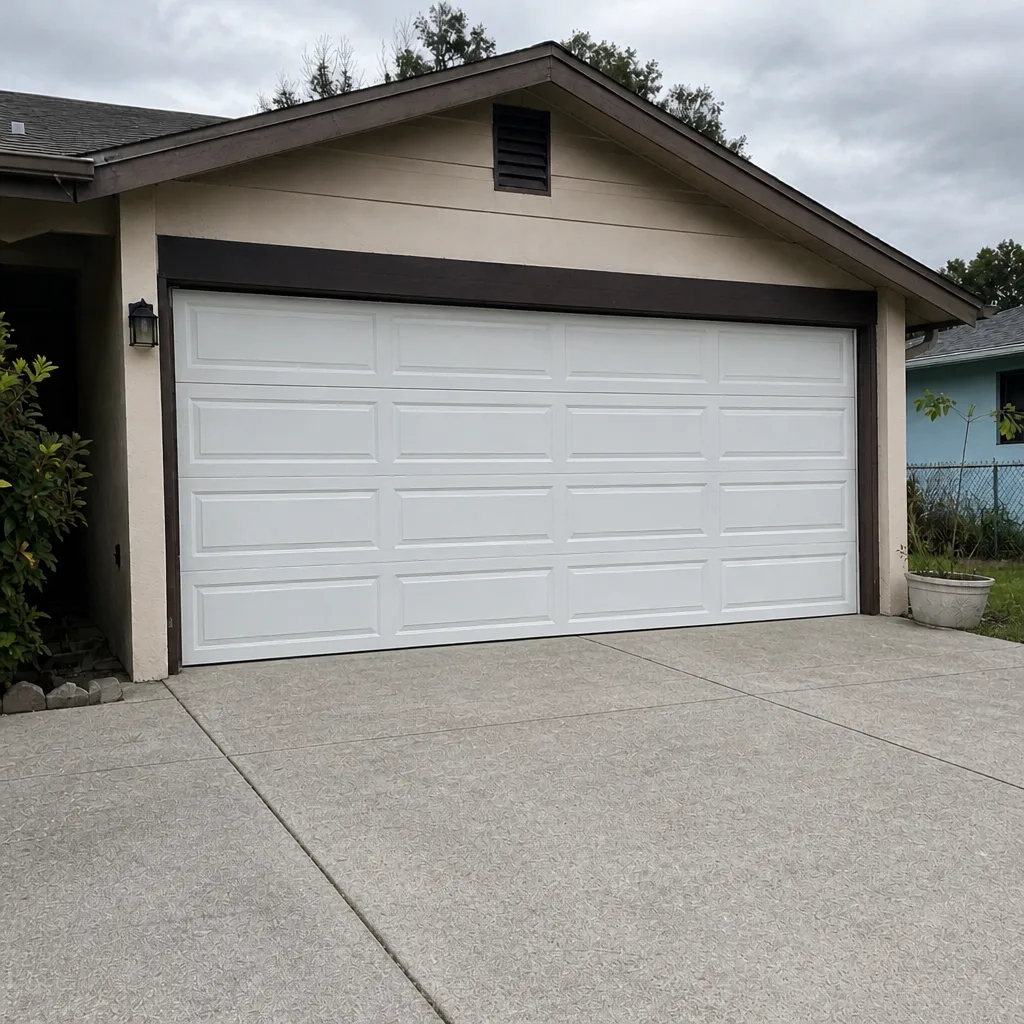
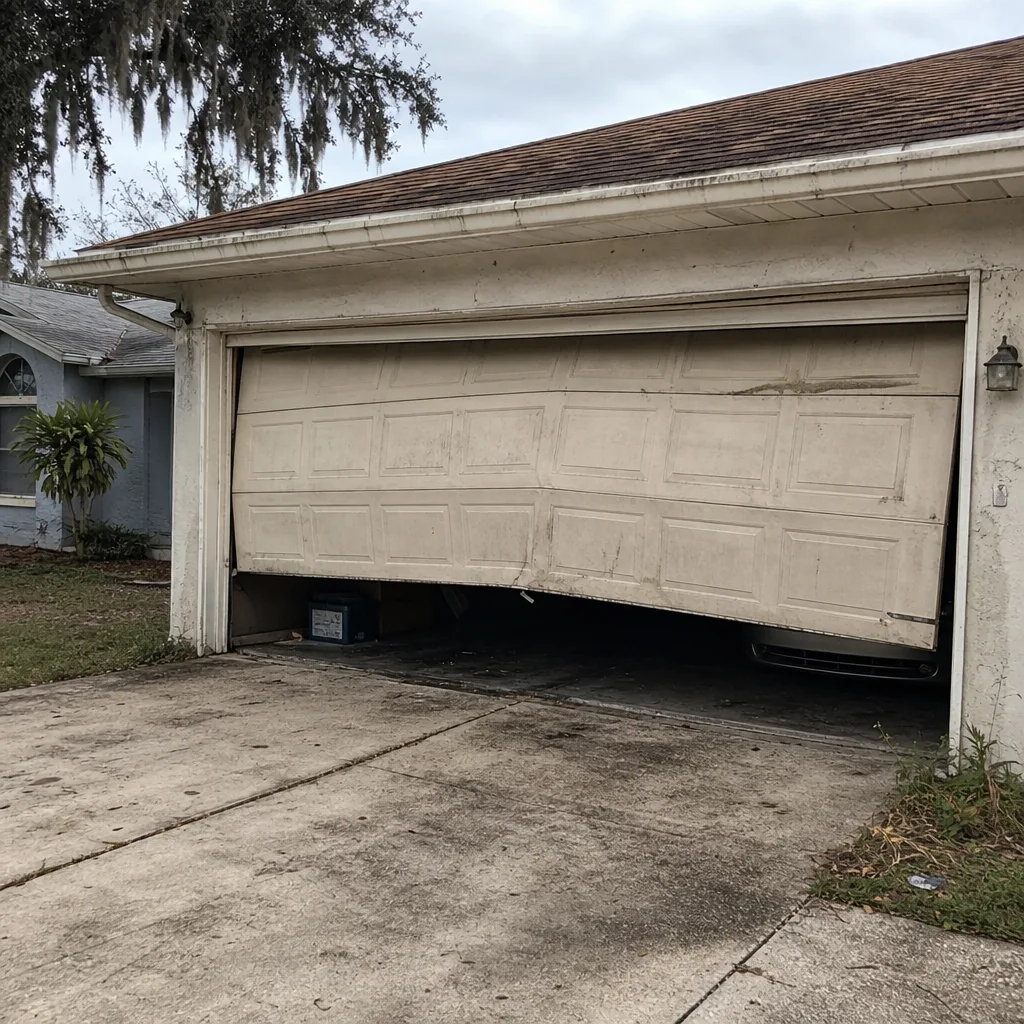
See the difference
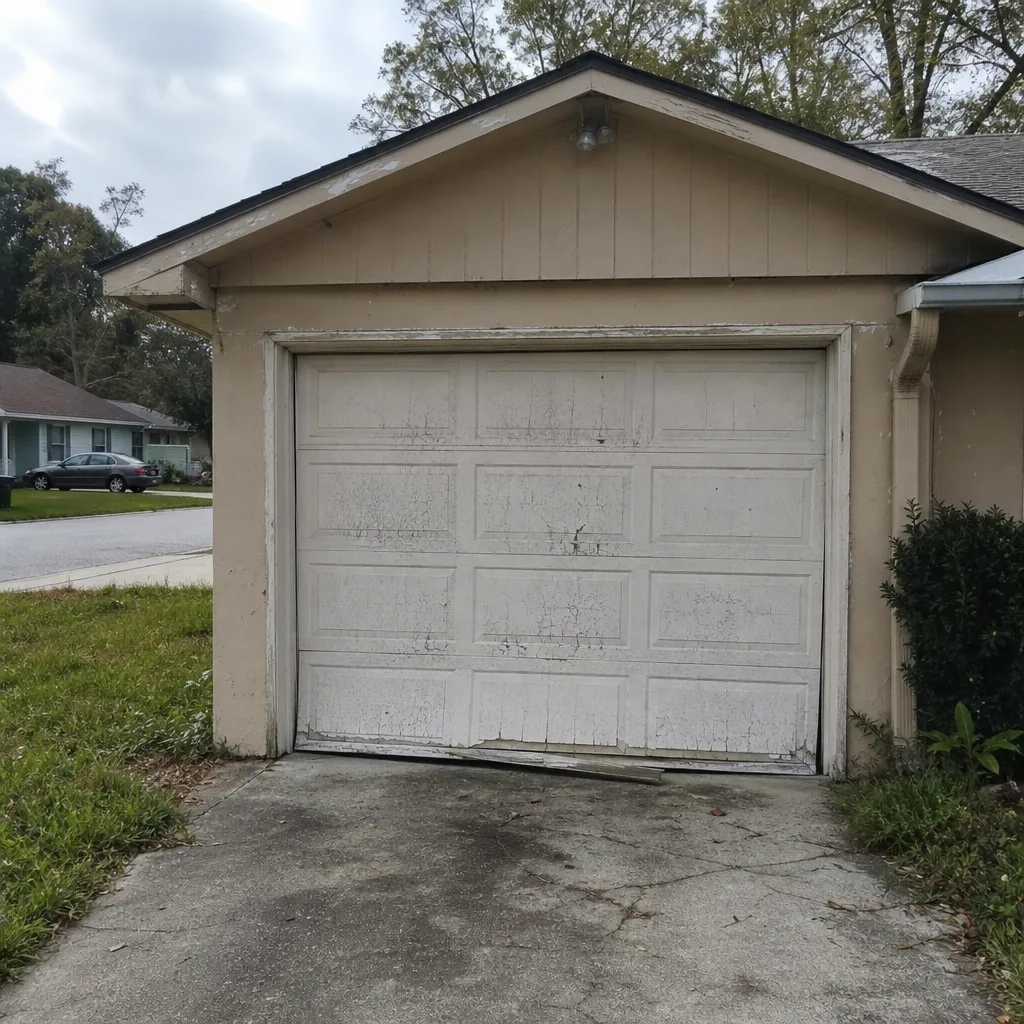 Before
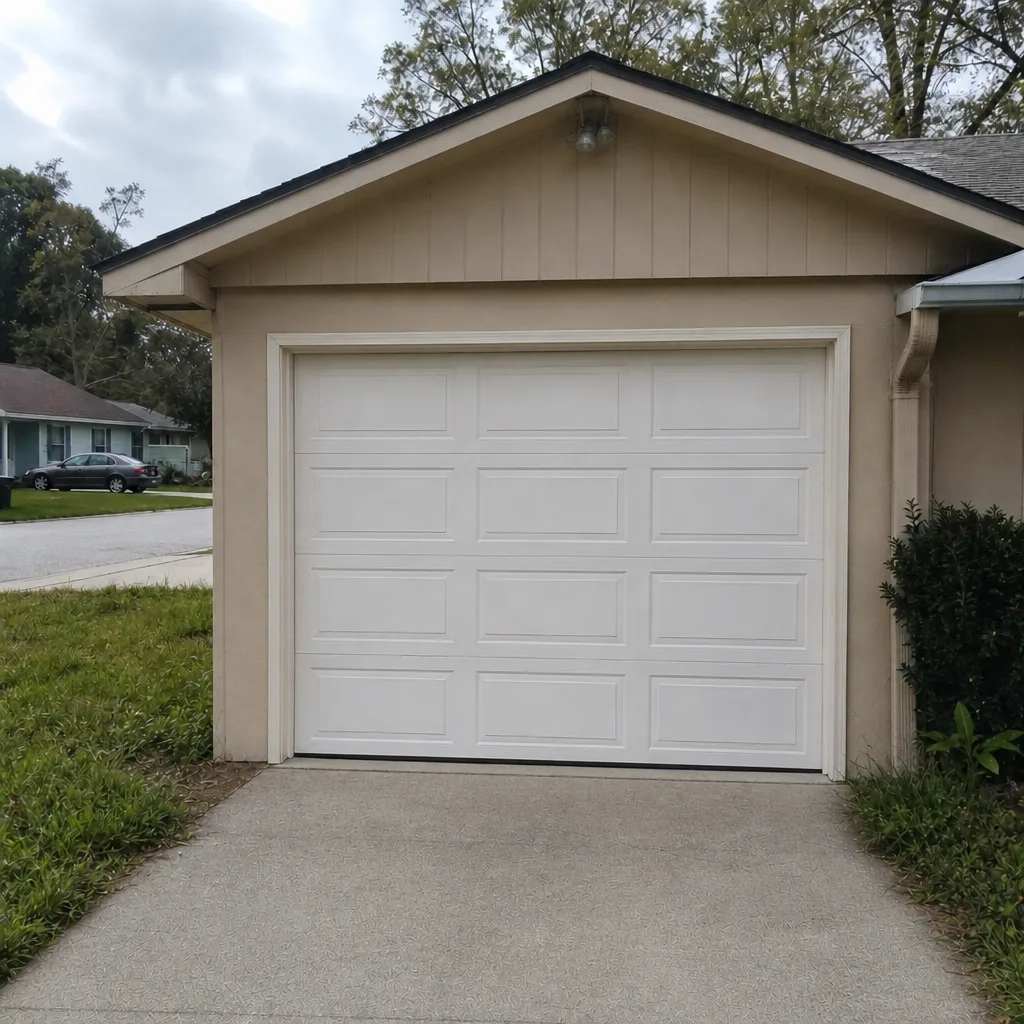 After
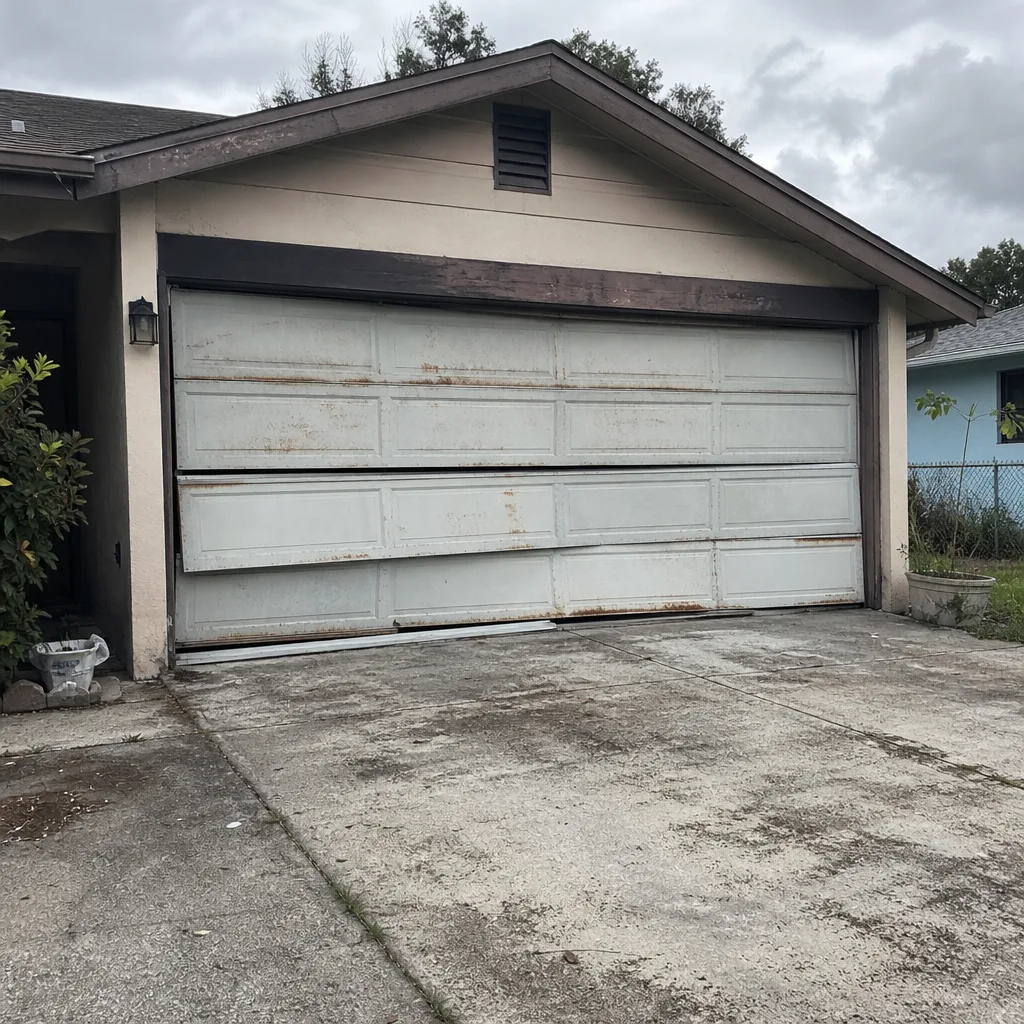 Before
 After
 Before
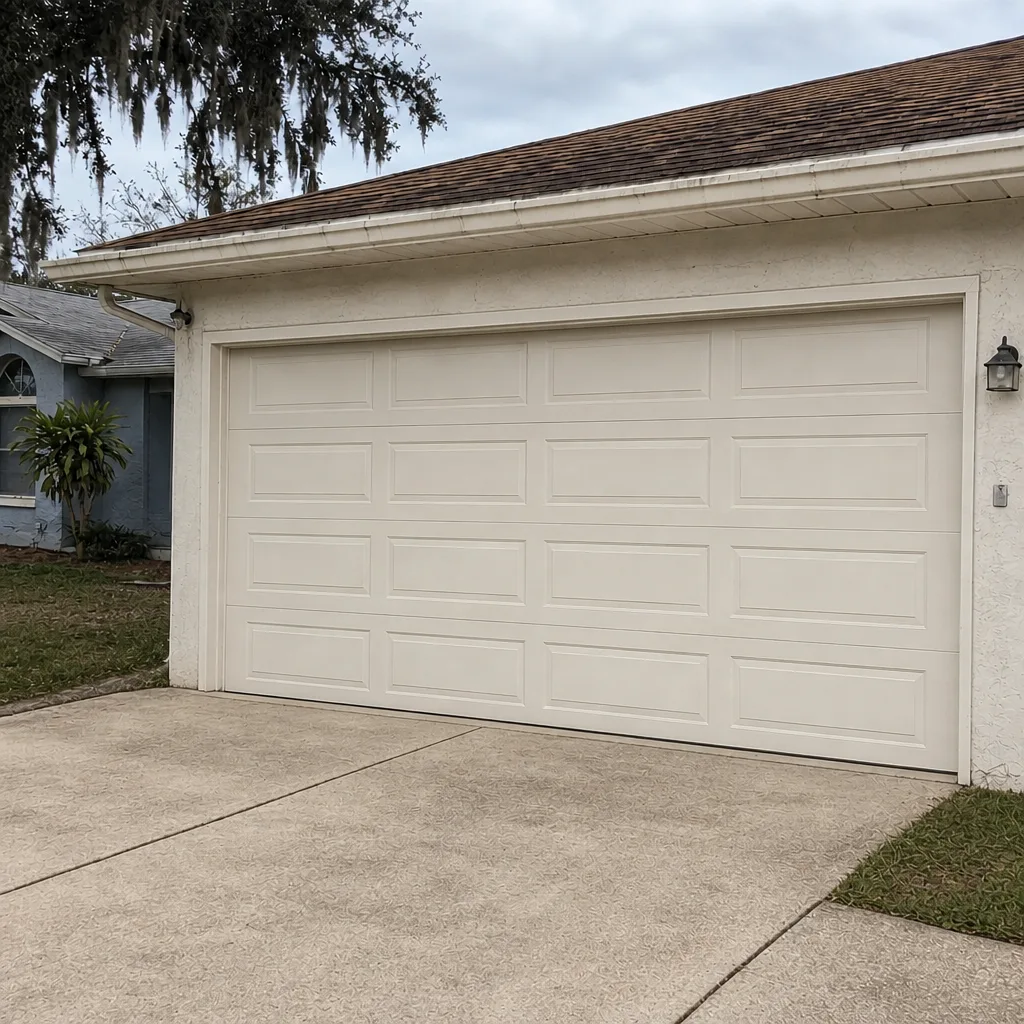 After
When to Call a Professional
Call us if you’ve seen any of the following: a sharp bang from the spring area, a fraying cable, a door that won’t stay level on a balance test, a door that reverses without an obstruction, or a door that’s off its track. Those are safety-critical, and they’re not things to diagnose by cycling the door repeatedly. Call us also if the opener is making a grinding or buzzing sound without moving the door, or if the remote range has dropped enough that you’re having to press it several times. If a door is stuck open, stuck closed, or has come off its tracks, that’s an emergency in our book, and we handle emergency garage door service for exactly this reason. Pine Hills Garage Door Repair Pros offers free estimates in Pine Hills. Call (833) 718-2605 and we’ll get you a clear answer and a written price before any work begins.
Frequently Asked Questions
The most serious warning sign is a sharp bang from the spring area, which usually means a torsion spring has snapped. Stop using the door and call a technician. A fraying cable and a door that won’t reverse are close seconds. These are safety-critical, and they’re the ones to treat as emergencies rather than scheduling for later.
No. Torsion springs are under heavy tension and can cause severe injury if they release unexpectedly, and extension springs have their own hazards. This is one of the most dangerous repairs on a garage door and belongs to a trained technician. We specialize in spring repair for that reason.
If the door is hard to lift by hand or sags on one side, the problem is likely the door’s springs or tracks, not the opener. If the door moves freely by hand but the opener hesitates, reverses, or grinds, the issue is in the opener itself. A balance check tells you which side of the line you’re on. Call (833) 718-2605 for an exact diagnosis, and the estimate is free.
Noise in a Pine Hills door is most often dry or worn rollers, hinges that need lubrication, or a track that’s out of alignment. The humid climate here dries out lubricant and accelerates roller wear, so a door that’s been quiet for years can suddenly start squealing. Grinding and squealing mean different things, so match the sound to the component before assuming the worst.
We recommend a visual check of the springs, cables, rollers, and bottom seal once a season, plus a listen for new noises whenever you use the door. In Pine Hills’ humid climate, spring corrosion and seal rot move faster than many homeowners expect, so the spring check is worth doing more often than the rest.
We treat a stuck door, a door that’s stuck open, or a door that’s off its tracks as an emergency, and we offer emergency garage door service for those situations. Call (833) 718-2605 and we’ll get you the fastest available appointment. For repairs, we’ll confirm timing on the call. The price is quoted and agreed before any work begins.
No. We give you a written estimate that sets the price before any work starts, and the work is done to that estimate. If we discover something beyond the original scope, we’ll tell you and get your approval before doing anything additional. The number in the estimate is the number you’re quoted. Call (833) 718-2605 to set up a free estimate.
The Bottom Line
Garage door failures come with warnings, and the trick is reading them in the right order. Sound tells you which component is failing: a bang means the spring, a grind means track or rollers, a squeal means bearings. Movement tells you whether the door is balanced. A visual check catches rust, frayed cables, and worn rollers before they turn into emergencies. In Pine Hills, the humid climate puts spring corrosion and seal rot first on the watch list, so check those more often. If a warning involves springs or cables, stop and call us. Everything else is a conversation about scheduling. The door that gets a seasonal look and a prompt repair is the door that lasts.
Call (833) 718-2605 for a free estimate. Pine Hills Garage Door Repair Pros handles repair, opener repair, spring repair, and full new-door installation, and garage doors are all we do.
Written by the team at Pine Hills Garage Door Repair Pros.