Last updated November 21, 2026
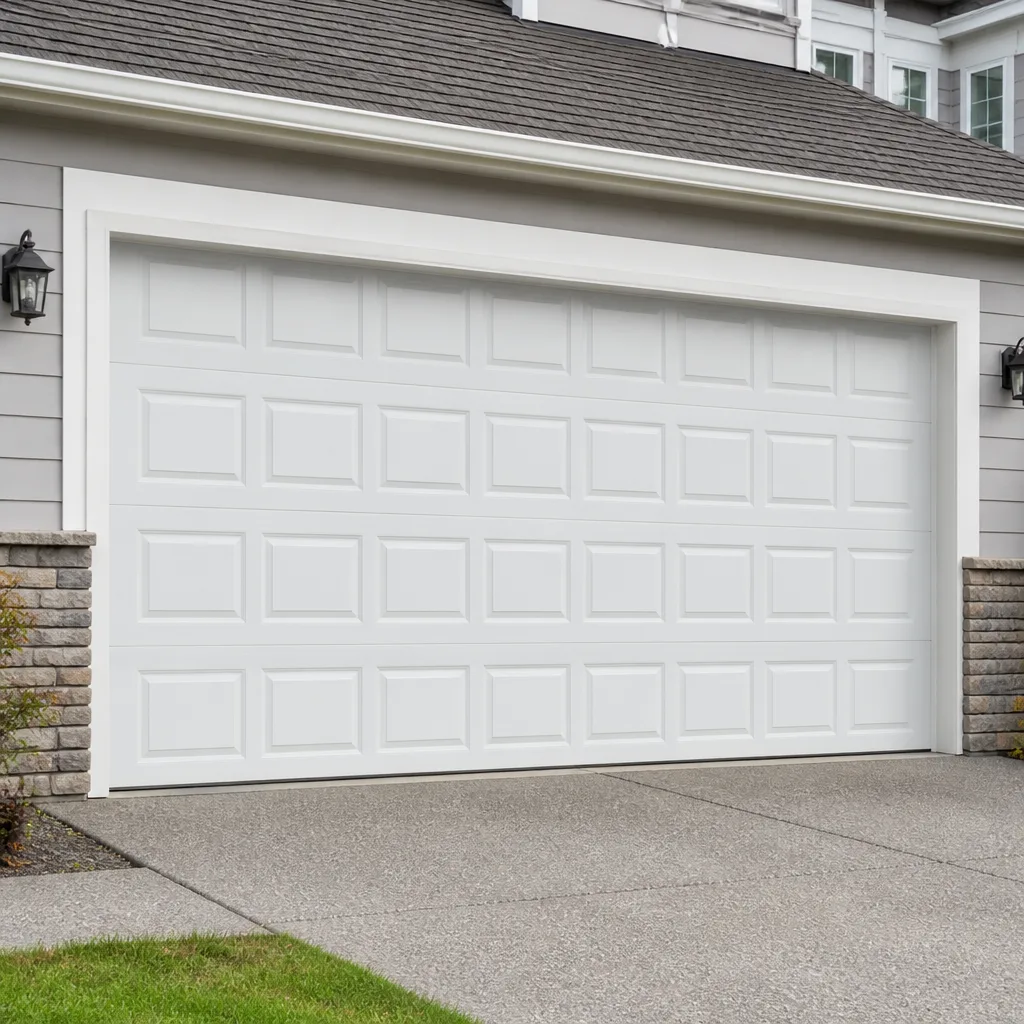 Raised-panel steel
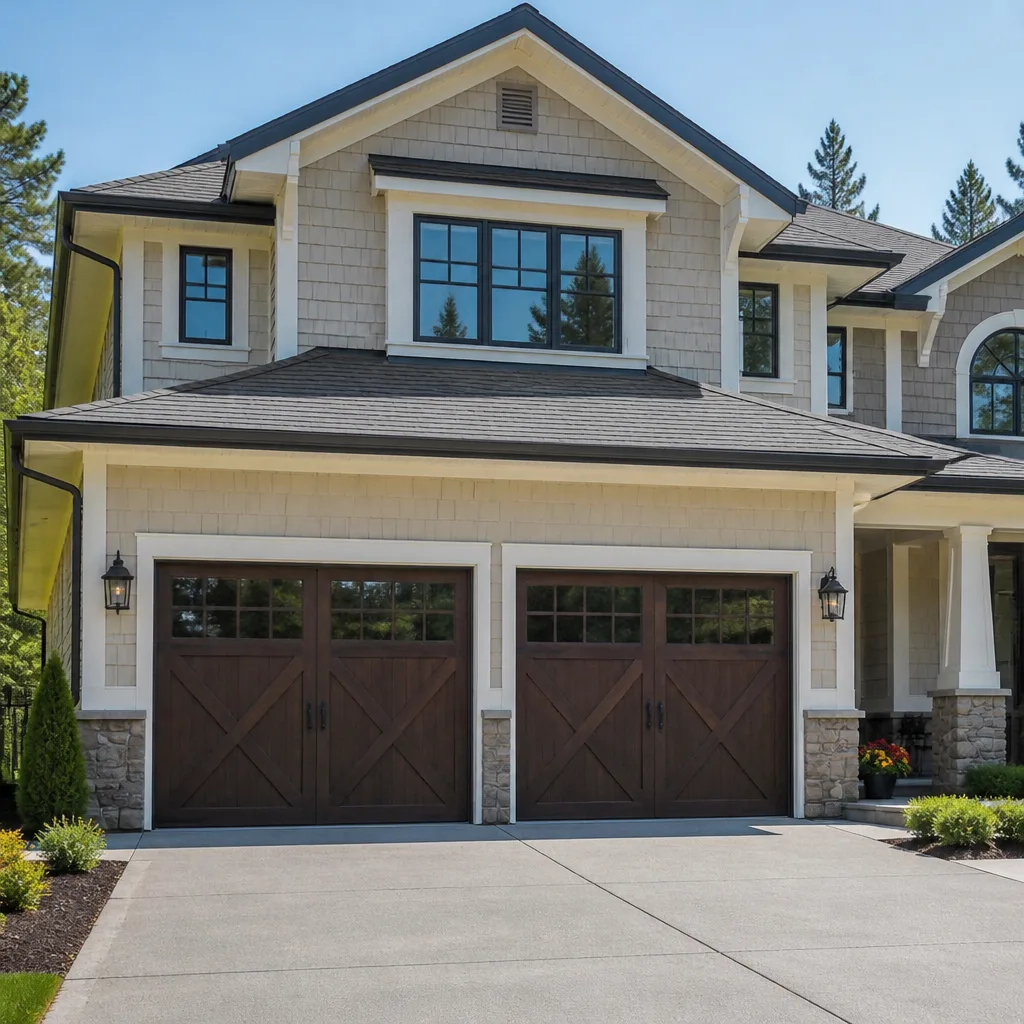 Carriage house
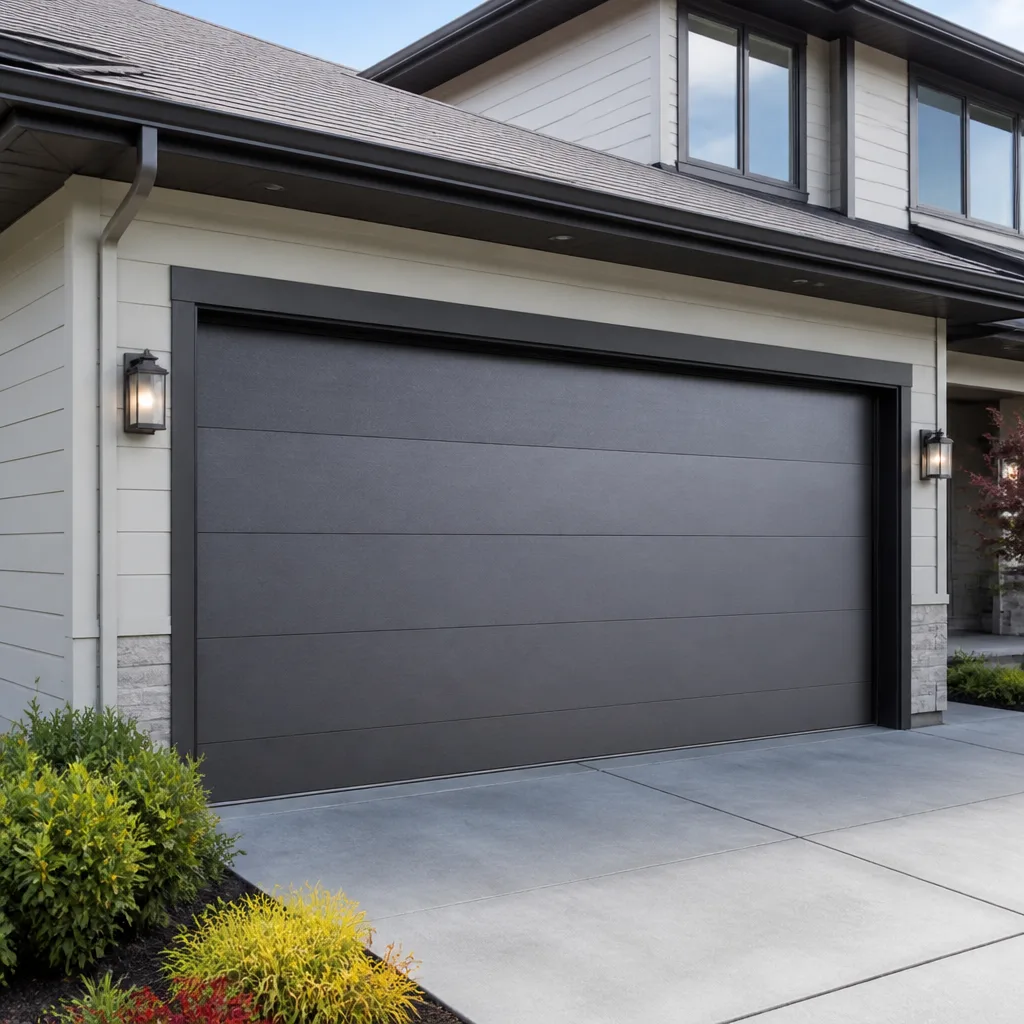 Modern flush
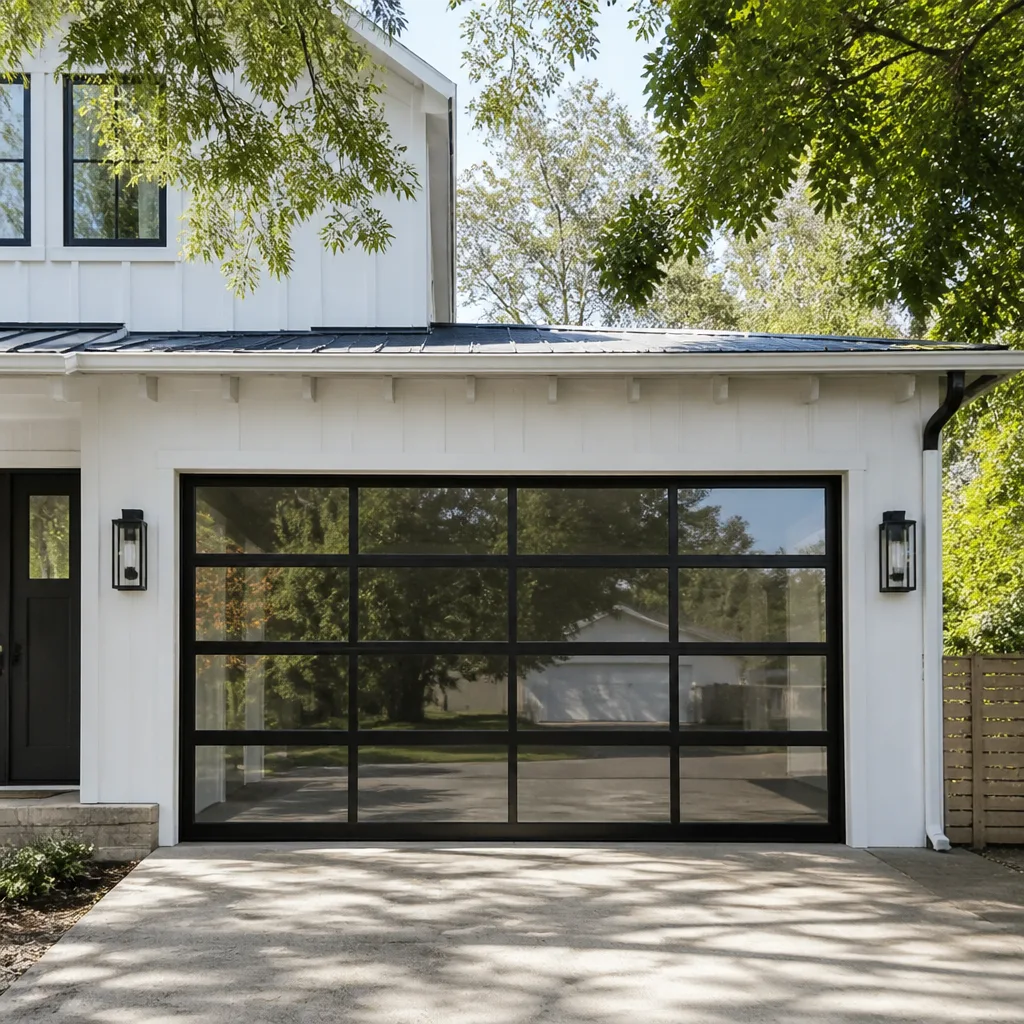 Full-view glass
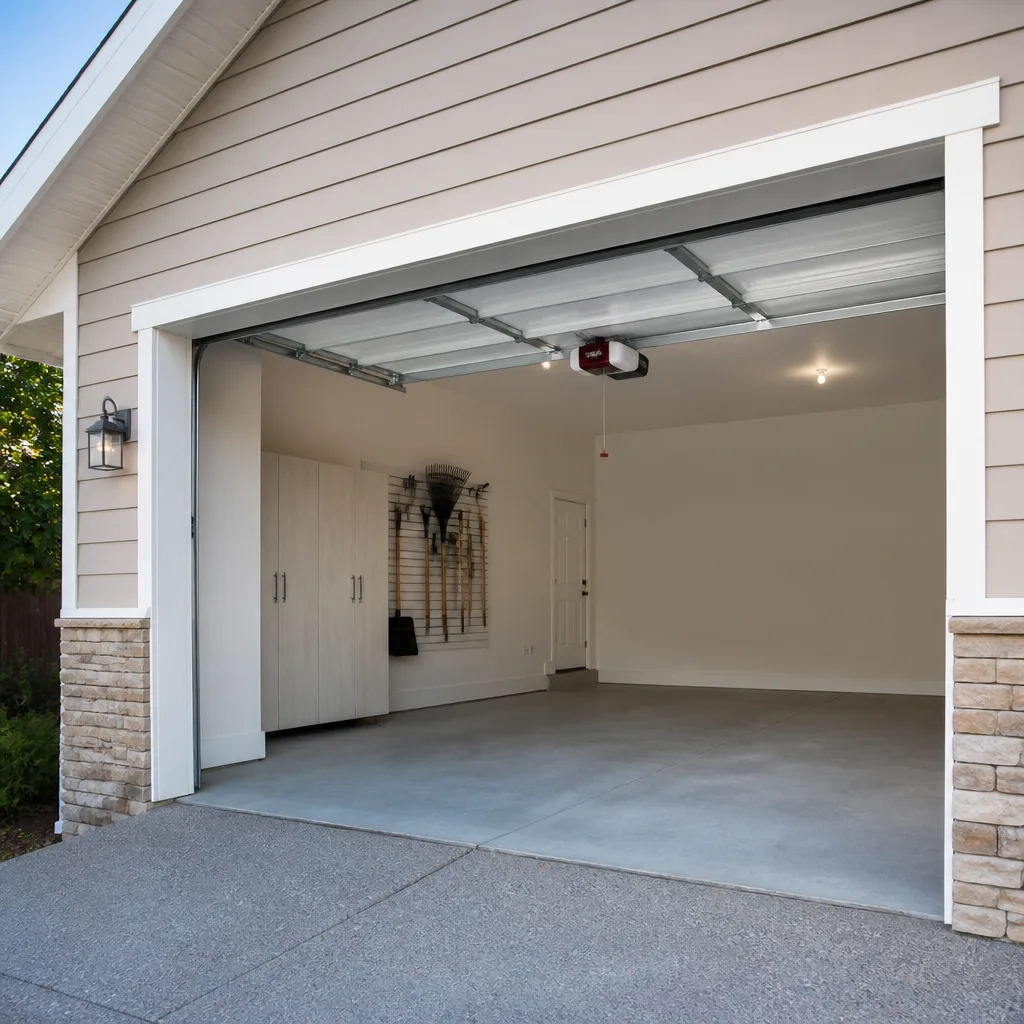 LiftMaster openers
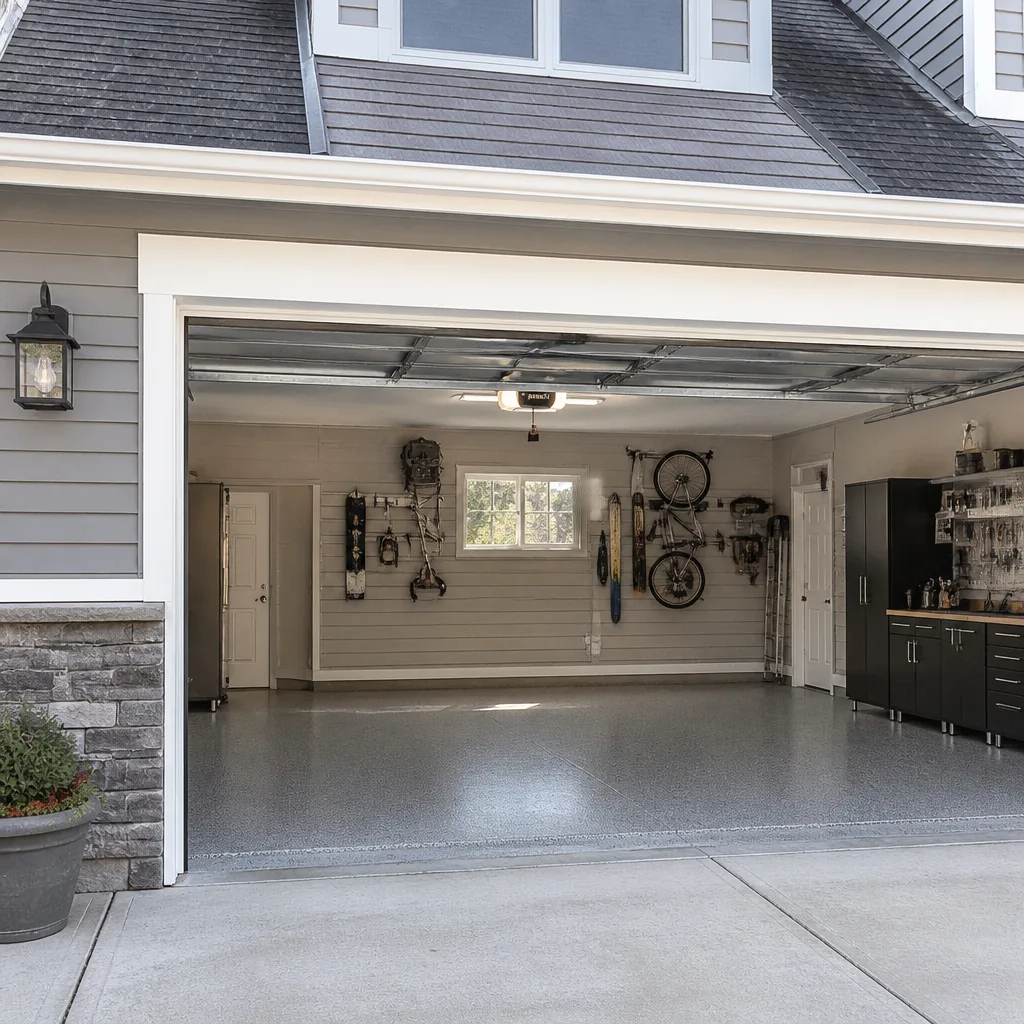 Chamberlain openers
Full 25-point door and opener safety check with every visit - springs, cables, rollers, tracks, and your LiftMaster or Chamberlain opener included
You get a price before we start. It does not change when the pro arrives.
Get your free estimateThe Complete Guide to Garage Doors in Pine Hills
Most garage door advice online is written for a mythical homeowner in an average climate with an average house. That guide doesn’t work here. Pine Hills summers sit near 90% humidity for weeks, afternoon storms roll through hard and often, and the housing stock leans heavily on construction from the 1970s through the 1990s. Those three realities shape almost every decision you’ll make about a garage door, from panel material to opener brand to what will actually fit your opening without structural work. This guide walks through each decision the way it plays out in Pine Hills specifically, so you can choose, maintain, and repair a door that lasts in this climate rather than somewhere else.
Quick Answer
Choosing a garage door in Pine Hills comes down to matching material to climate, size to housing era, and opener to the brands actually serviced locally. For most homes, an insulated steel door rated for Florida wind-load requirements, paired with a belt-drive opener from one of the major brands, delivers the longest service life in this humidity. Get the opening measured before you shop, because the dominant home sizes here constrain what fits without structural modification.
Styles & brands we work with
- Raised-panel steel
- Carriage house
- Modern flush
- Full-view glass
- LiftMaster openers
- Chamberlain openers
Table of Contents
- Why Generic Garage Door Guides Get Pine Hills Wrong
- How Humidity and UV Exposure Change Your Material Choice
- Standard Garage Opening Sizes in Pine Hills’s Housing Eras
- Which Opener Brands Dominate Pine Hills and Why It Matters
- Wind-Load Requirements and What They Mean for Your Options
- What a Garage Door Costs in Pine Hills vs. National Averages
- A Maintenance Routine Built for This Climate
- Repair or Replace? A Decision Framework
Why Generic Garage Door Guides Get Pine Hills Wrong
National garage door content treats climate as a footnote. In most of the country it is. Here it isn’t. Pine Hills sits in humid subtropical conditions, which means the ambient moisture level climbs high enough for months at a time that every material in your door assembly is under constant load. Steel wants to rust at the seams and the bottom edge. Wood wants to swell, warp, and pull away from its frame. The lubricant on your springs and rollers thins and migrates faster than it would in dry air. None of that shows up in a guide written for a homeowner in Ohio or Arizona.
The housing stock compounds it. Pine Hills has a large share of homes built between the 1970s and the 1990s, when single-car and double-car openings were standardized at a fairly narrow set of dimensions. That’s actually good news for replacement: because so many homes share the same sizes, panel and hardware options are well supplied. It’s bad news if you assume a modern oversized door will drop into an older frame without modification. It usually won’t, and finding that out after you’ve ordered is expensive.
Here’s the counterintuitive point. A lot of homeowners in this climate assume they need the heaviest, most insulated door available to fight the heat. In practice, the single best investment for a humid-climate garage is a properly sealed, insulated steel door with correct drainage at the threshold. Thicker panels help, but a door with a failing bottom seal lets in moisture and pests regardless of what it’s made of. We’ve repaired plenty of premium doors that were quietly rotting from the ground up because a worn bottom seal went unnoticed for years.
How Humidity and UV Exposure Change Your Material Choice
Material choice is the highest-stakes decision in this climate, and it’s where generic advice fails most often. Here’s how the three main options actually behave in Pine Hills.
Steel with polyurethane insulation
This is the right answer for most Pine Hills homes, and it’s not close. Steel panels resist humidity without swelling or warping. Polyurethane core insulation holds its shape and insulation value better than polystyrene in high heat, and it seals out the moisture that drives corrosion. Look for a hot-dipped galvanized coating and a factory finish, because the factory process holds up to UV far better than any field-applied paint. Clopay and Amarr both build steel doors that handle this climate well. A good steel door will outlast any other option in this humidity, and it will look right longer.
Wood and wood composite
Wood is beautiful and it’s a maintenance commitment here, not a one-time purchase. In year-round humidity, wood composite doors move. Panels swell and shrink, joints open, and moisture finds the seams. If you want the wood look, a steel door with a woodgrain finish gives you the appearance without the swelling, and it will cost you less over the life of the door. We’re not saying wood doors can’t survive in Pine Hills, only that they demand more frequent inspection and refinishing than most homeowners expect.
Uninsulated steel
Uninsulated steel is the budget option and it’s fine for a detached or unconditioned garage where temperature control doesn’t matter. In an attached garage that shares a wall with living space, an uninsulated door lets heat and humidity straight into the house’s thermal envelope. The difference in comfort and in cooling load is real. If your garage is attached, insulated is the better call.
The UV piece matters more than people expect. Constant sun exposure degrades finishes, fades colors, and makes cheap rubber seals brittle. A factory-finished steel door with a UV-stable finish survives this. A cheap door with a thin finish won’t, and you’ll be repainting within a few years.
Standard Garage Opening Sizes in Pine Hills’s Housing Eras
Before you shop for anything, measure your opening. The dominant home sizes in Pine Hills cluster around a small number of standard dimensions, and knowing which one you have tells you what will fit without cutting into the structure.
Most single-car openings in homes from this era are 8 feet wide by 7 feet tall or 9 feet wide by 7 feet tall. Most double-car openings are 16 feet wide by 7 feet tall. A smaller share of homes carry an oversized single at 10 feet or an extra-tall opening at 8 feet. The pattern holds closely enough that most replacements here are a straight swap of the panel and track assembly into the existing opening.
- Measure the opening, not the old door. The clear opening between the jambs and up to the headroom above is what matters. Doors are measured slightly larger than the opening.
- Measure the side room. You need enough space on each side for the vertical tracks. Older homes sometimes have tight side clearances that limit hardware options.
- Measure the headroom. The distance from the top of the opening to the ceiling determines whether you can use a standard track setup or need a low-headroom configuration.
- Check the backroom. That’s the depth from the door to the back of the garage. A standard door needs roughly the door height plus a couple of feet for the horizontal track and opener to sit.
Where it gets expensive is when a homeowner wants a wider or taller door than the opening allows. That’s structural work, not a door replacement, and it’s a different project entirely. Knowing your size upfront prevents that surprise.
Which Opener Brands Dominate Pine Hills and Why It Matters
Brand matters less than the door itself, but it matters for one practical reason: parts availability twenty years from now. The two opener brands we see most often on service calls in Pine Hills are Genie and Chamberlain. The doors themselves lean toward Clopay and Wayne Dalton, with plenty of Amarr mixed in. If your opener is from one of these manufacturers, even an older unit, replacement parts are still findable, and any technician who works on the brand regularly can diagnose it fast.
What we’ve seen repeatedly is that a homeowner buys a cheap opener from a brand nobody services locally, and when it fails there’s no path forward except a full replacement. That’s the hidden cost of an off-brand unit, and it shows up a decade down the line. Buying a mainstream brand isn’t flashy. It’s the decision that keeps future repairs simple.
The other thing worth knowing: belt-drive openers are quieter and hold up better in a humid garage than chain-drive, and modern units in the mainstream brands support smart-home integration through the manufacturer’s own app and accessories. That integration is a real convenience and a real reason to stay within one brand’s ecosystem when you replace.
When your opener acts up, it’s usually the opener and not the door. Our garage door opener repair work covers the electronics side, but the first step is always checking whether the door itself is binding and forcing the opener to work harder than it should. A door that moves freely makes any opener last longer.
Wind-Load Requirements and What They Mean for Your Options
Florida’s building code is strict about how garage doors must be built and anchored, and that narrows your panel and hardware choices. The reason is straightforward: in a storm, the garage door is the largest and weakest opening in the house’s envelope. If it fails, pressure gets inside and the whole structure is at risk. The code exists to prevent that.
What this means in practice for Pine Hills homeowners:
- Replacement doors must meet a wind-load rating for the specific location, and the door you choose has to carry the right rating documentation.
- The hardware that anchors the door to the frame matters as much as the panel. Track brackets, hinges, and the way the door attaches to the structure all factor into the rating.
- Some doors are rated for the required load only with additional specified hardware or reinforcement, so the door you pick and the hardware you install have to be selected together.
- Not every door on the market is rated for this area. A door that’s fine in another part of the country may not carry the required rating here.
If you’re replacing a door, ask your city’s building department about the permit and the required rating before you order anything. Requirements vary by property type and construction details, and getting a specific answer for your home is worth the phone call. A door that’s installed without the right documentation can be a headache when you sell. This is also a good reason to work with a specialist rather than a generalist, because the code piece is where a lot of shortcuts get taken.
What a Garage Door Costs in Pine Hills vs. National Averages
National cost guides quote a wide range that’s built from an average across the whole country, and that average doesn’t reflect the Orlando metro market. In Pine Hills, the typical installed cost of a full replacement runs higher than the national midpoint because of the wind-load requirements, permit costs, and the outdoor-rated materials this climate demands. The ranges below are typical estimates for the area. A written quote is what actually sets your price.
| Job | Typical Pine Hills cost (estimate) |
|---|---|
| Single-car door, uninsulated steel, installed | $850 – $1,200 |
| Single-car door, insulated steel, installed | $1,200 – $1,900 |
| Double-car door, insulated steel, installed | $2,000 – $3,400 |
| Spring replacement, one spring | $180 – $340 |
| Matched pair of springs (replaced together) | About twice the single-spring range |
| Opener replacement, supplied and installed | $300 – $650 |
| Panel section replacement | $300 – $700 per section |
| Track realignment and roller replacement | $150 – $350 |
Notice the spring line item. If you have two springs and both are the same age, they should be replaced as a matched pair. That’s not an upsell; a matched pair wears evenly, and replacing one on a door with two means you’ll pay for the second call shortly after. Plan on roughly double the single-spring estimate when both are replaced.
The big driver of replacement cost here is material and rating, not labor. An insulated, rated steel door is more expensive than an uninsulated one, and it’s the right choice for Pine Hills. The other driver is the opener, which is usually a separate line item if it needs replacing at the same time.
Prices are estimates, and the written quote you receive is the final word. That quote should be agreed before any work starts, so there’s no invoice surprise. If a number grows once a technician is on-site, the reason should be clear and discussed with you first. We quote the job, you approve the number, and then work begins.
A Maintenance Routine Built for This Climate
Garage doors don’t need much attention to stay functional, but the routine that works in a dry climate is too infrequent here. Humidity speeds up wear on moving parts, and storm season brings wind-driven debris and water into the tracks. A short inspection every few months catches the small problems before they become the expensive ones.
- Check the bottom seal. Run a hand along the bottom edge and look for cracks, hardening, or gaps. A worn bottom seal is the single most common cause of moisture and pest problems, and it’s cheap to replace.
- Look at the springs. Don’t touch them. Look for visible gaps in the coils or a door that’s suddenly much heavier than it used to be. Either sign means you stop and call a professional.
- Test the balance. Disconnect the opener and lift the door by hand halfway. It should stay put when you let go. If it drops or needs effort to hold, the springs or the balance is off.
- Clean and lubricate the moving parts. Rollers, hinges, and the tracks should be lubricated with a proper garage-door lubricant, not WD-40. Wipe the tracks clean of debris first.
- Test the safety reverse. Put an object in the door’s path and confirm the door reverses when it meets resistance. That function is a safety requirement, not a nicety.
- Check the weatherstripping around the frame. The side and top seals fail slowly and quietly, letting in both moisture and pests.
Do this every season and once more before storm season arrives. Most of the repair calls we handle in Pine Hills trace back to a seal or a roller that was ignored for a couple of years. A $15 roller set replaced on time is a lot cheaper than a track realignment.
Repair or Replace? A Decision Framework
Homeowners wrestle with this one, and the honest answer depends on three things: the age of the door, the cost of the repair relative to replacement, and whether the door meets current wind-load requirements. Work through these questions in order and the answer usually becomes clear.
- Is the repair a small percentage of replacement cost? A $250 repair on a door that would cost $1,800 to replace is an easy call. A $900 repair on a $1,000 door usually means replace.
- Is the door on its second or third repair in as many years? Repeat repairs signal that the whole system is nearing the end of its life, and each repair is just buying time.
- Does the door meet current wind-load requirements? An older door that doesn’t carry the required rating is a candidate for replacement even if it’s working fine. This is the one reason to replace a functional door.
- Is the panel damaged or just the hardware? A dented panel or a broken spring can often be fixed independently. A door that’s warped over its whole span usually can’t be.
- Is the opener the problem or the door? An opener that’s struggling may just be fighting a door that’s out of balance. Fix the door and the opener may be fine.
For anything involving the springs or the balance, don’t try to answer this yourself. Torsion springs and the cables that work with them store an enormous amount of energy. When a spring fails, it fails violently, and the wrong tool in the wrong place is a serious injury waiting to happen. This is the single most important safety point in this guide. Springs are dangerous, this is not a DIY repair, and that’s true no matter how handy you are. If you suspect a spring problem, our garage door spring repair is the right call.
Common Mistakes to Avoid
- Buying a door without checking the wind-load rating. It’s the most expensive mistake on this list. A door that doesn’t carry the required rating for this area can create problems at resale and may not be permitted.
- Replacing one spring when two are worn. If you have a matched pair, replace them together. Replacing one leaves the door unbalanced and you’ll be paying for the second one soon.
- Skipping the bottom seal. A worn bottom seal lets in moisture and pests and, over time, damages the door from the ground up. It’s the cheapest part to replace and the most expensive to ignore.
- Buying an off-brand opener. It’s fine until it fails, and then there’s nowhere to get parts. Stick with a brand that’s actually serviced in Pine Hills.
- Assuming a new door fits an older opening. Older homes here have standard openings for the era, and not every modern door drops in without modification. Measure first.
- Using WD-40 on the moving parts. It’s a solvent, not a lubricant, and it attracts dirt. Use a proper garage-door lubricant on hinges and rollers.
- Patching a spring or cable failure with a DIY fix. This isn’t worth the risk. The stored energy in a torsion spring can injure a person badly in seconds.
See the difference
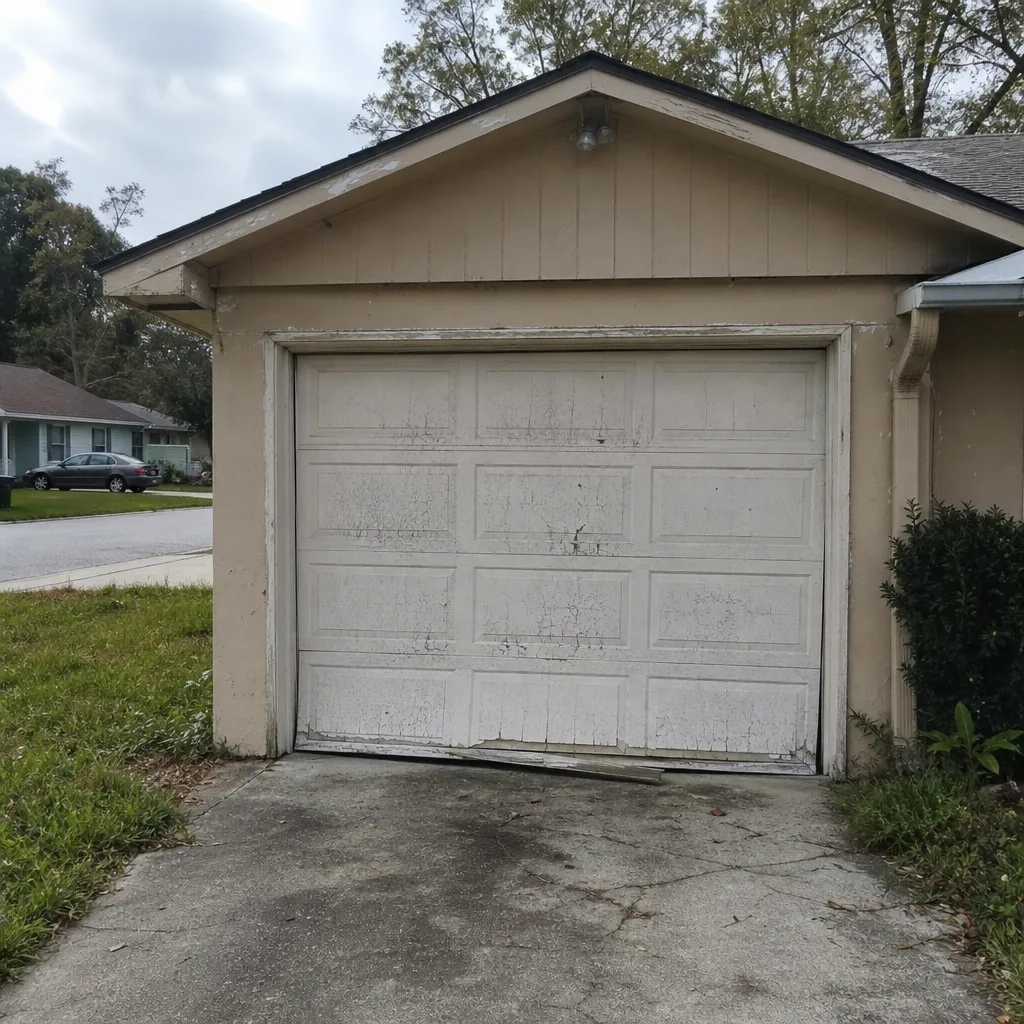 Before
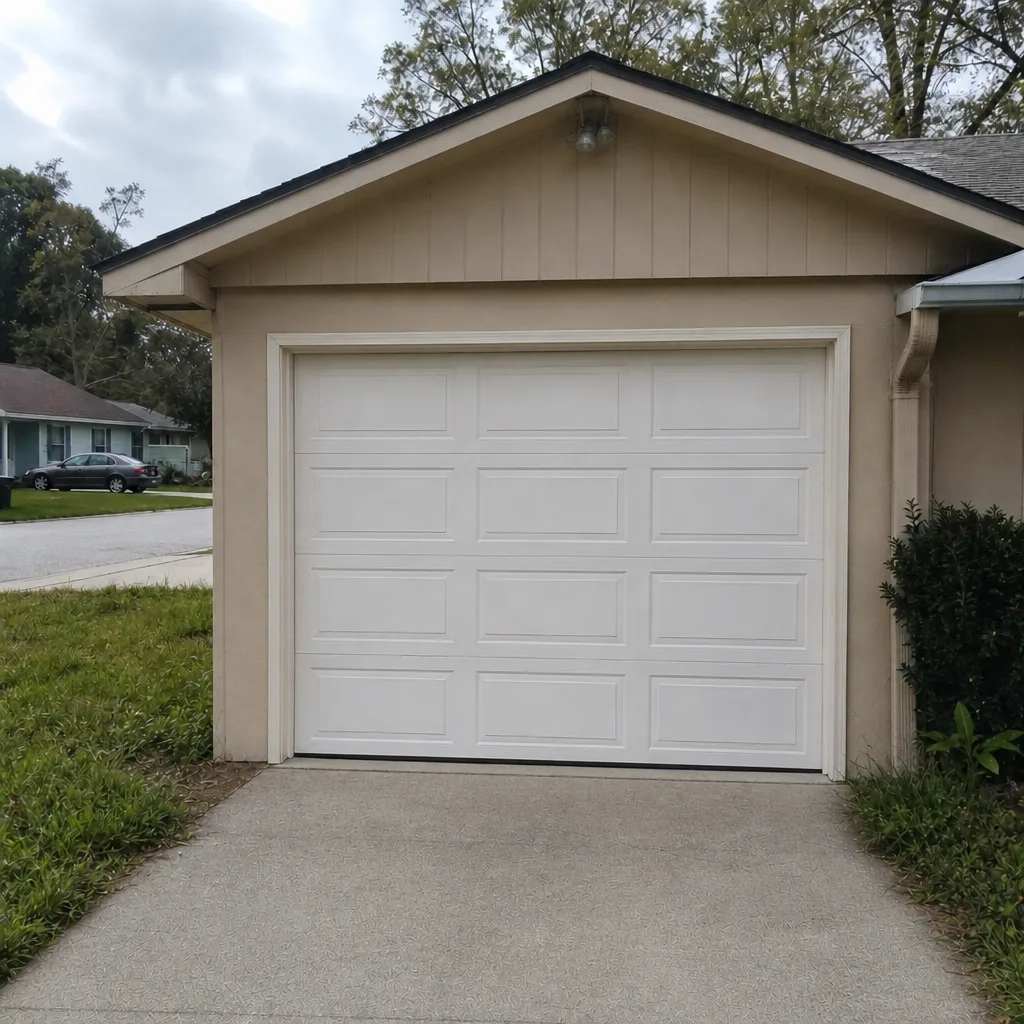 After
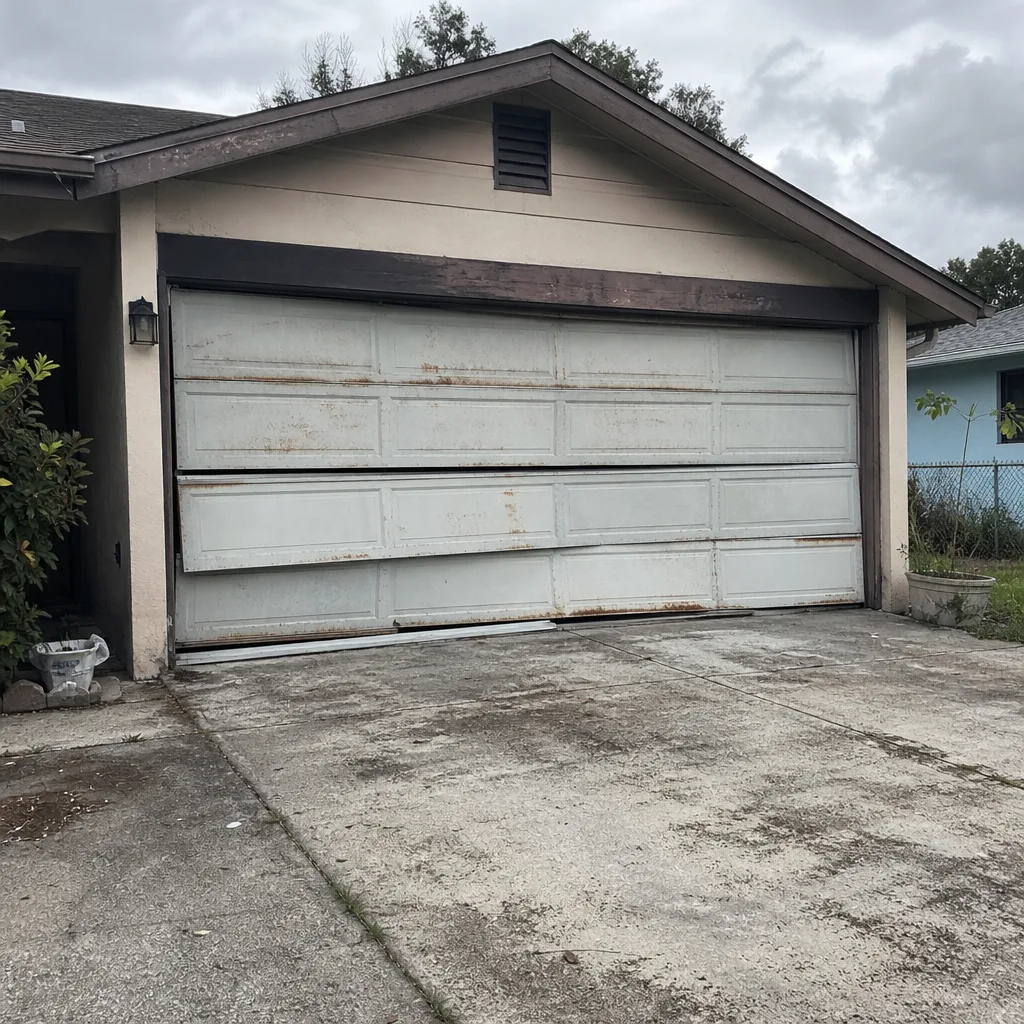 Before
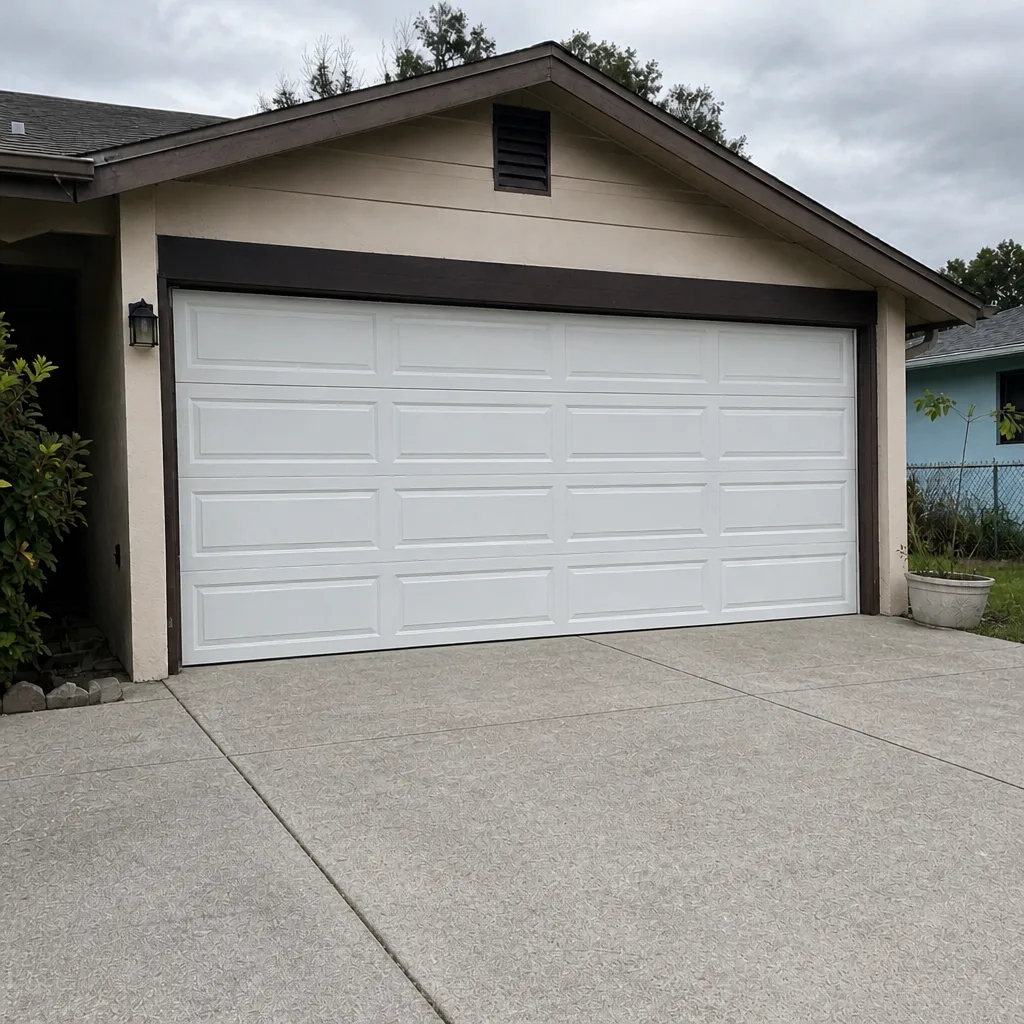 After
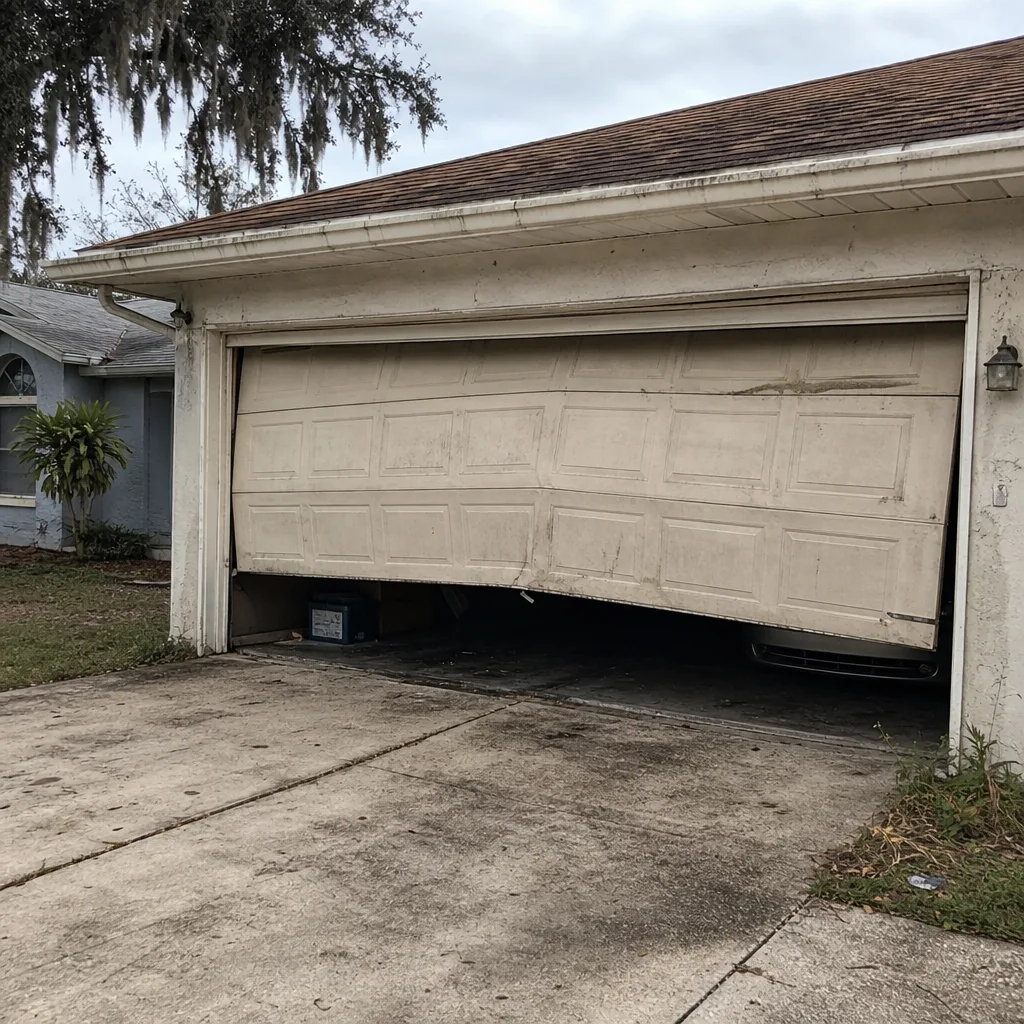 Before
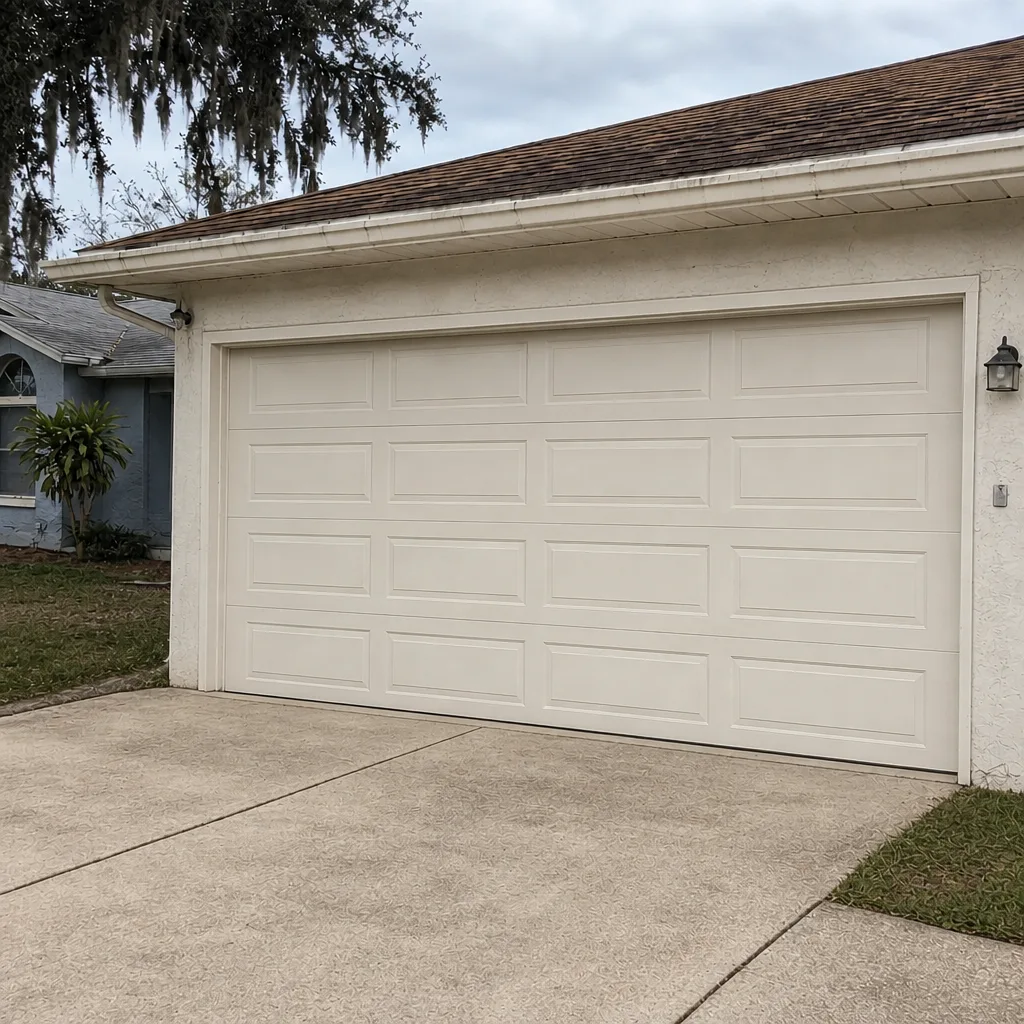 After
When to Call a Professional
Call for anything involving the springs, the cables, or the balance of the door. Those are the high-risk parts, and a trained specialist can diagnose and repair them safely. Call too for a door that’s off the track, one that won’t open or close, or a door that’s suddenly much heavier than it used to be. If your opener runs but the door doesn’t move, or the door moves in jerks, that’s worth a look before small problems grow. Pine Hills Garage Door Repair Pros offers free estimates in Pine Hills, and our technicians have up to 11 years of experience on the mechanical and electronic sides of the system. Call (833) 718-2605 for a free estimate. Our garage door repair covers both the door and the hardware, and we work on the brand you already have.
Frequently Asked Questions
Insulated steel is the best choice for most Pine Hills homes. It resists the humidity without swelling or warping, holds its insulation value in high heat, and a factory finish holds up to UV far better than field-applied paint. Wood and wood composites require significantly more maintenance here.
Genie and Chamberlain openers are the brands we see most often on service calls here, and the doors themselves lean toward Clopay and Wayne Dalton. It matters because parts for mainstream brands stay available, which keeps future repairs simple. An off-brand opener can be a dead end when it fails.
Most jurisdictions require a permit for a garage door replacement, and this area’s wind-load requirements make the permit and the door’s rating documentation important. Ask your city’s building department about the specific requirements for your property before you order a door. Get a clear answer before the work begins.
Typical installed costs here run around $1,200-$1,900 for an insulated single and $2,000-$3,400 for an insulated double, which is generally higher than a straight national midpoint. The difference comes from wind-load requirements, permits, and outdoor-rated materials. The written estimate sets your final price, and it’s agreed before work starts. Call (833) 718-2605 for an exact quote; estimates are free.
Yes, a stuck door is treated as an emergency. Pine Hills Garage Door Repair Pros offers emergency garage door service, not just standard scheduling, so call and we’ll work out the fastest path. Call (833) 718-2605 and tell us what the door is doing.
No, the written quote is the price you pay. We quote the job, you approve the number, and then work begins. If something different turns up once the door is in front of us, we explain it and you decide before anything is done.
The Bottom Line
Garage doors in Pine Hills come down to getting three things right: an insulated steel door that suits the humidity and UV here, an opening measurement taken before you shop, and an opener from a brand that’s actually serviced locally. Handle the wind-load and permit questions before you order anything, and plan on replacing both springs if you have a matched pair. Keep the bottom seal and the moving parts in good shape and the door will last. For anything involving the springs, cables, or balance, don’t take the risk yourself. Call (833) 718-2605 for a free estimate from the team at Pine Hills Garage Door Repair Pros.
Written by the team at Pine Hills Garage Door Repair Pros.