Last updated November 21, 2026
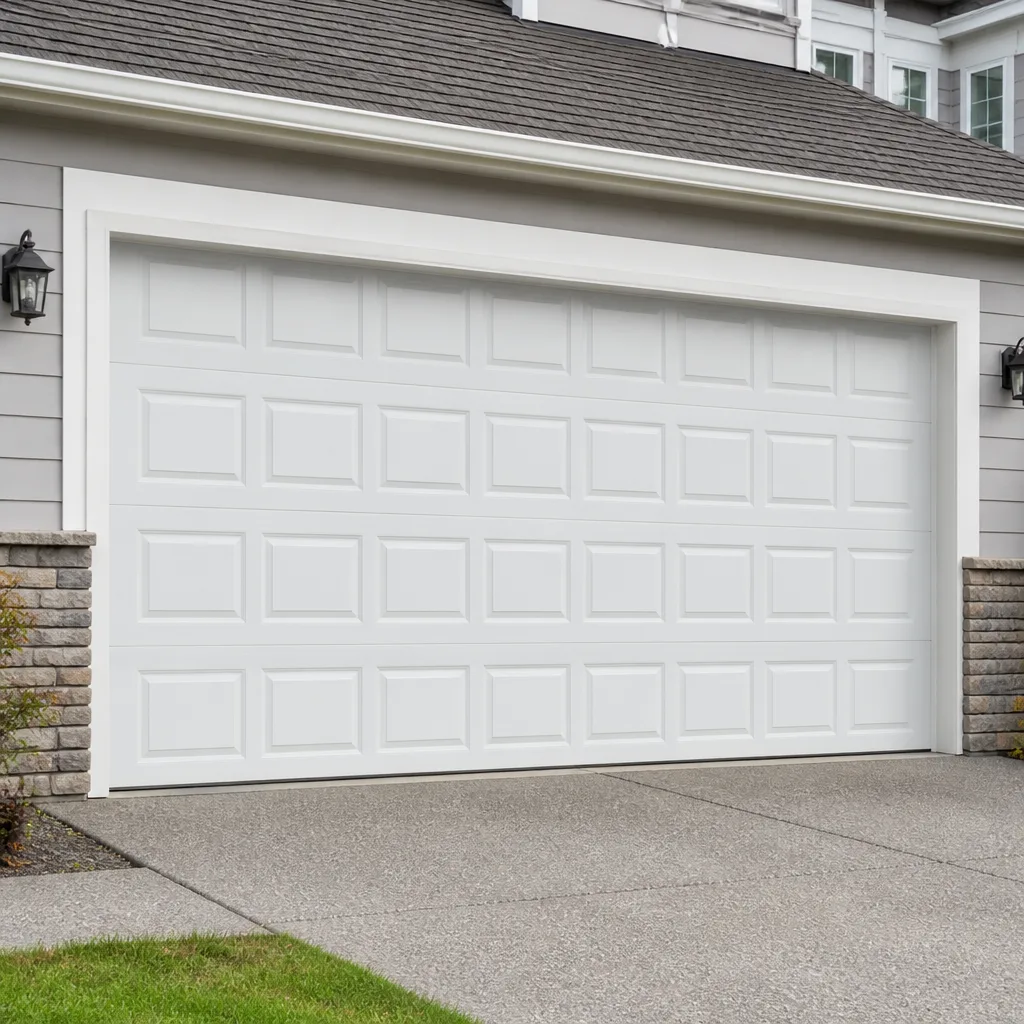 Raised-panel steel
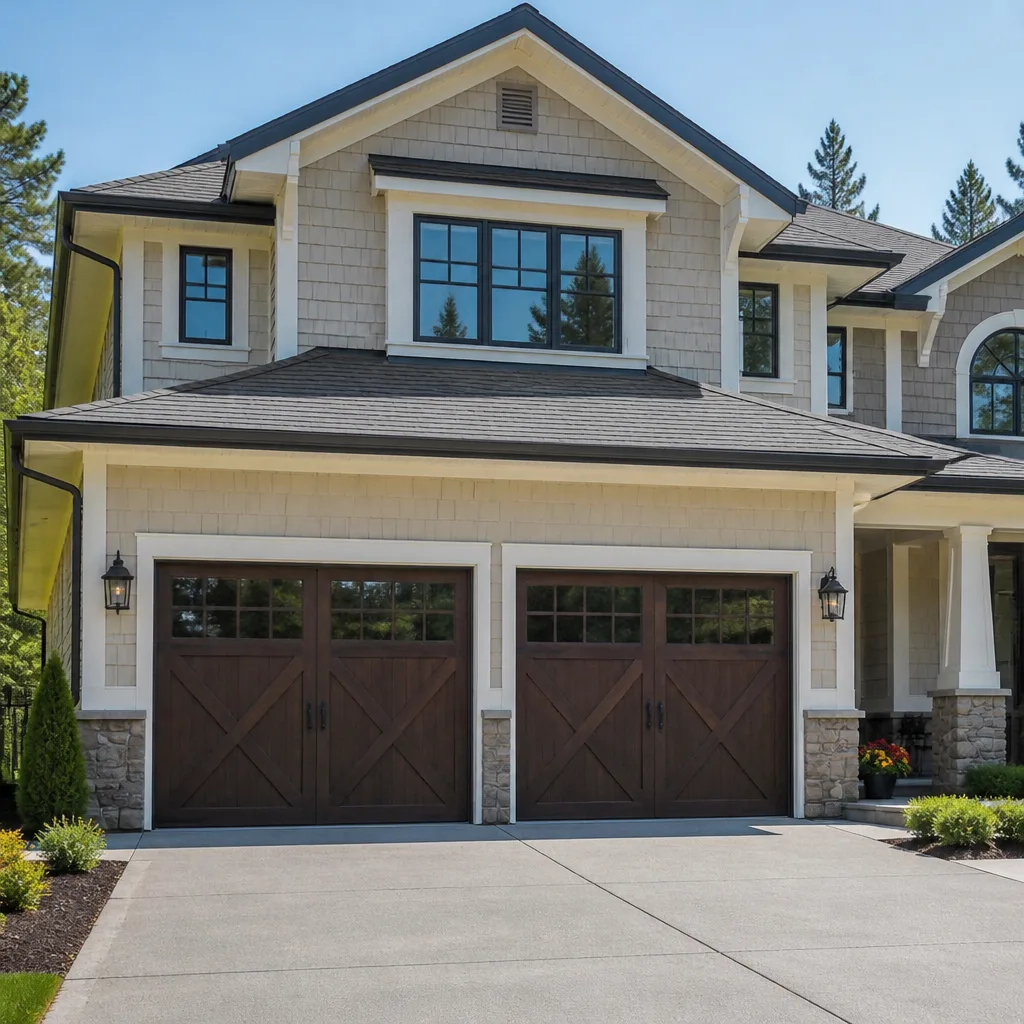 Carriage house
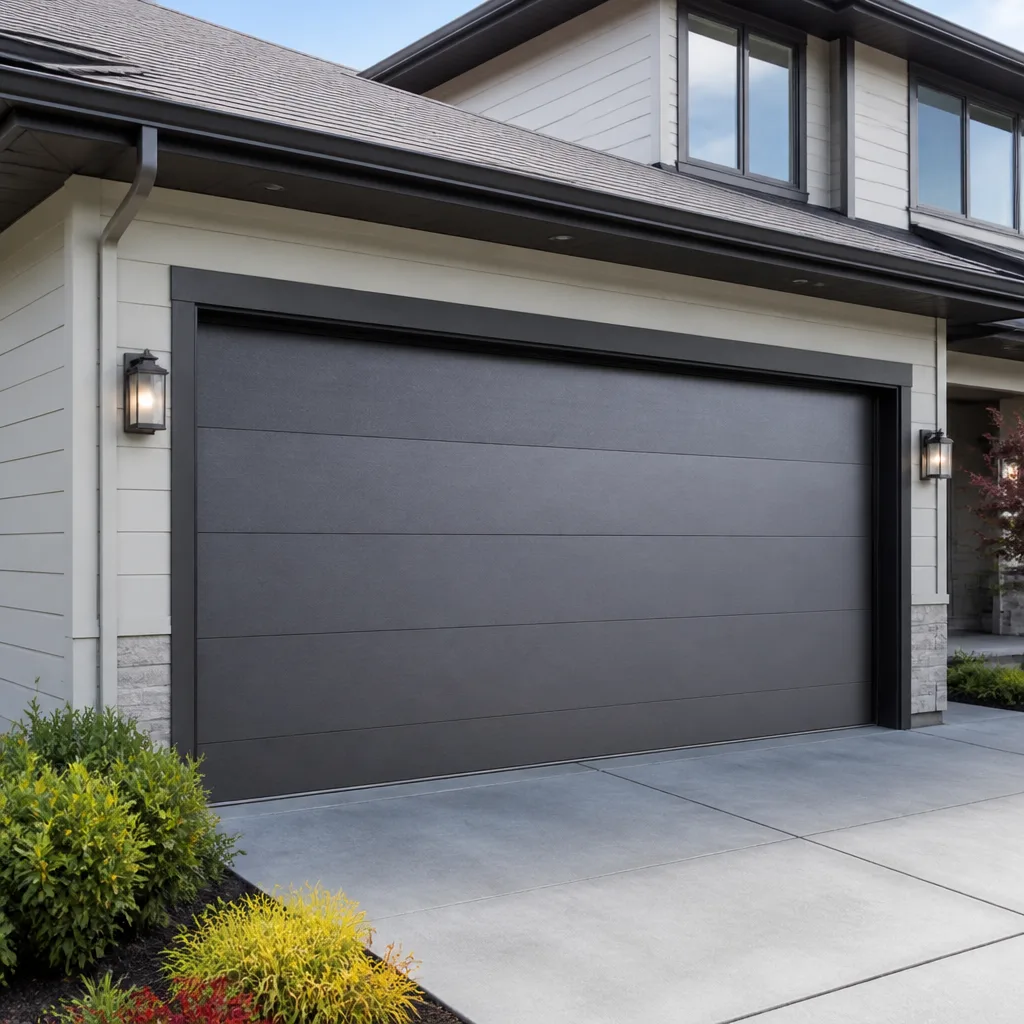 Modern flush
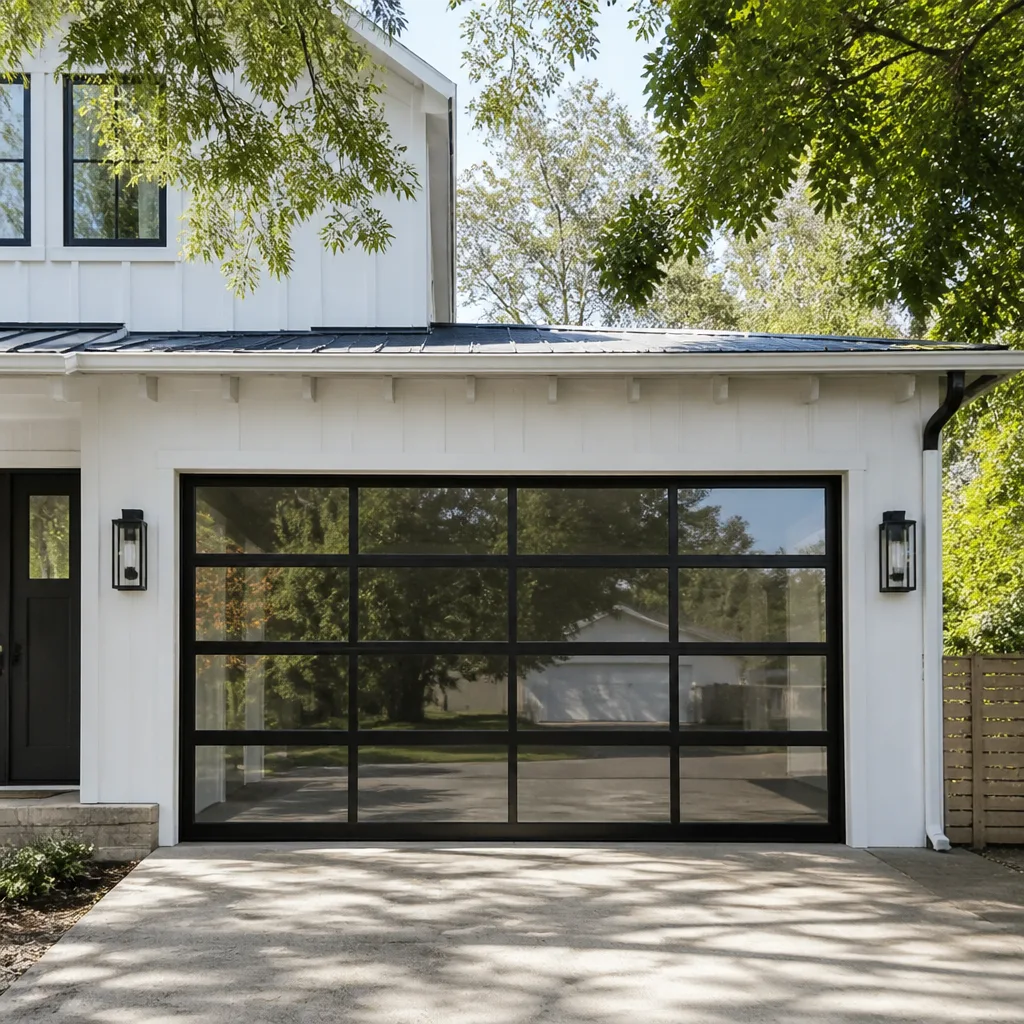 Full-view glass
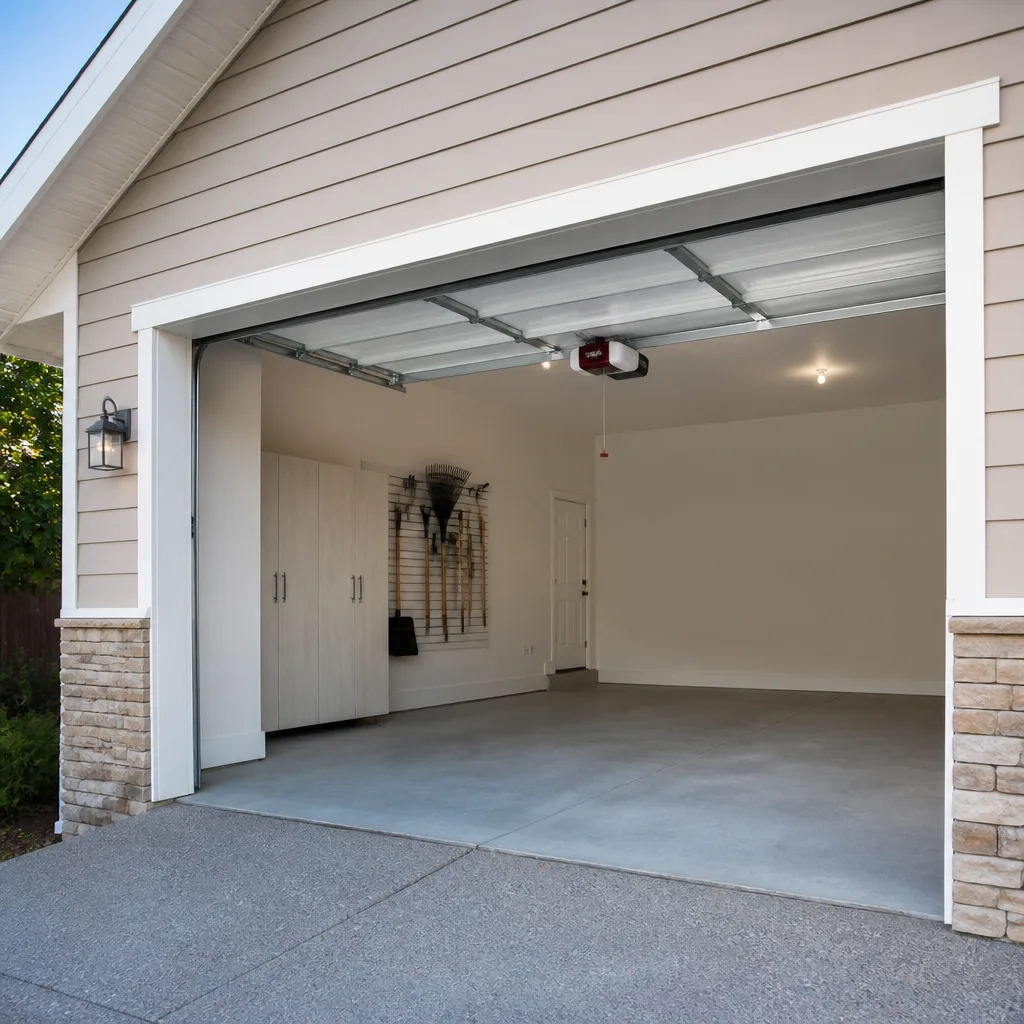 LiftMaster openers
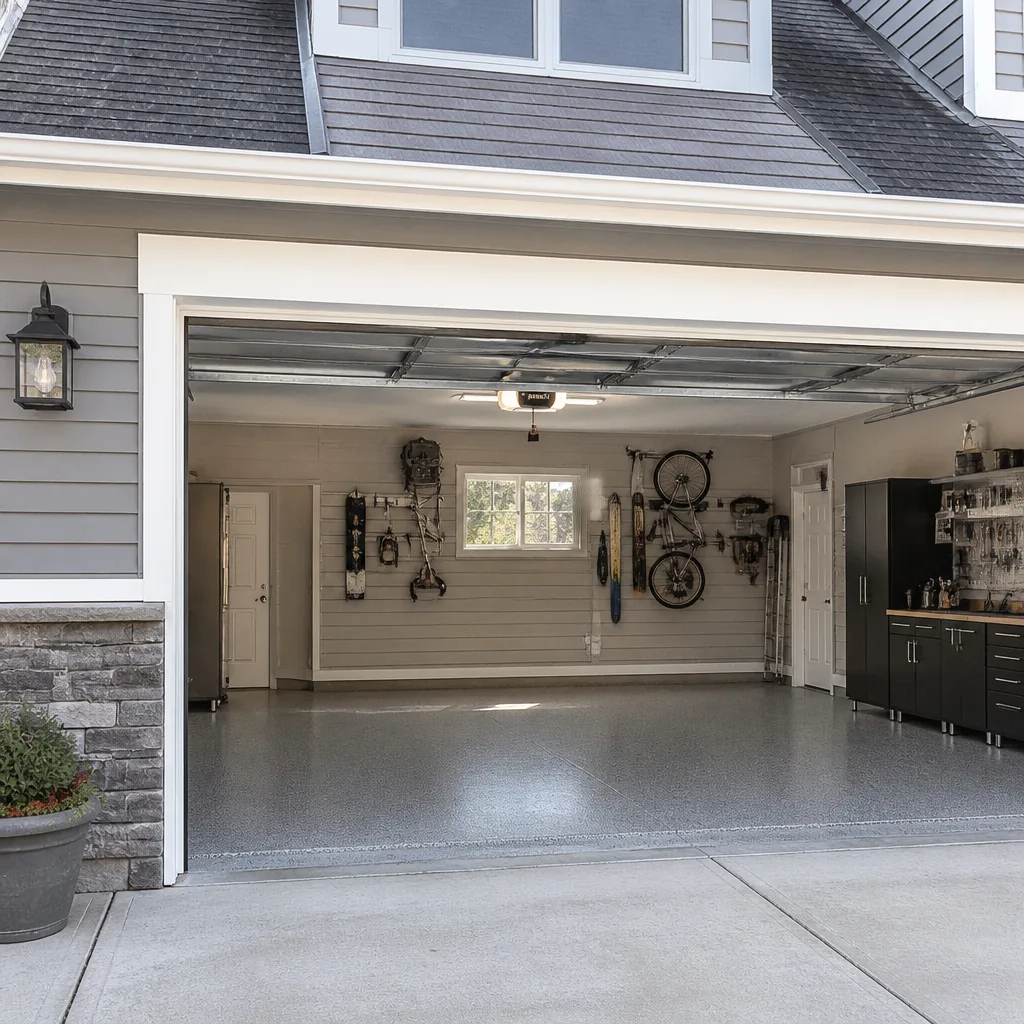 Chamberlain openers
Full 25-point door and opener safety check with every visit - springs, cables, rollers, tracks, and your LiftMaster or Chamberlain opener included
You get a price before we start. It does not change when the pro arrives.
Get your free estimateHow to Hire a Garage Door Contractor in Pine Hills: A Step-by-Step Guide
Any general contractor can install a panel. Most will tell you they handle garage doors. But very few homeowners ask the one question that exposes real expertise before they sign: “What’s the minimum headroom you can work with on a low-clearance install?” A garage door specialist answers without hesitating, because headroom, backroom, and side clearance are the first things they measure. A generalist reaches for a phone or a spec sheet. That single exchange tells you more than an hour of vague assurances. In this guide, we’ll walk you through vetting a garage door contractor in Pine Hills step by step, from verifying a license to reading a quote, so you can tell the difference between a specialist and a handyman with a longer menu.
Quick Answer
To hire a garage door contractor in Pine Hills, verify the contractor’s license through the Florida DBPR, confirm they specialize in garage doors rather than general handyman work, ask brand-specific technical questions, and insist on a written line-item quote before any work starts. A real specialist should be able to discuss spring specifications, opener models, and low-clearance measurements on the spot, and the local professional you hire should be licensed and insured as Florida requires.
Styles & brands we work with
- Raised-panel steel
- Carriage house
- Modern flush
- Full-view glass
- LiftMaster openers
- Chamberlain openers
Table of Contents
- Step 1: Check Florida Licensing and Insurance
- Step 2: Tell a Specialist from a Handyman
- Step 3: Ask Five Questions That Reveal Real Expertise
- Step 4: How to Read a Garage Door Quote
- Step 5: Avoid Storm-Season Rush Hiring Traps
- Step 6: What a Proper Measure Looks Like
- Step 7: What Fair Pricing Looks Like in Pine Hills
- Common Mistakes to Avoid
Step 1: Check Florida Licensing and Insurance in Under Two Minutes
Florida doesn’t license garage door contractors under a dedicated “garage door” category. Instead, garage door installers typically fall under the Division of State Fire Marshal’s jurisdiction for the door side (because garage doors are part of the building envelope) or under a general or specialty contractor license for the installation side. The practical move is simple: ask for the contractor’s license number, then verify it at the Florida Department of Business and Professional Regulation’s online license lookup. You can search by name or license number and see the license type, status, and any disciplinary history. It takes about two minutes.
If the number doesn’t show up or comes back expired or inactive, stop there. It doesn’t matter how good the pitch sounds or how quickly they say they can arrive.
Insurance matters just as much as the license. Ask for a certificate of insurance for general liability and workers’ compensation, and call the insurer listed on the certificate to confirm it’s current. A contractor whose crew isn’t covered can leave you exposed if someone gets hurt on your property. The local pro we connect you with is licensed and insured as their state requires, and that’s the standard to hold every contractor to in Pine Hills.
A few more points to check:
- Ask whether the contractor is the license holder or a subcontractor working under someone else’s license.
- Confirm the license covers installation, not just repair.
- Request a written copy of the insurance certificate at the time of the quote.
- Look up the business name on the DBPR site, not just the individual’s name.
Skip any of these and you’re trusting a stranger with a heavy, spring-loaded system attached to your house.
Step 2: Tell a Specialist from a Handyman
The hardest part of hiring isn’t finding someone who shows up. It’s finding someone whose work is actually garage doors. A handyman who lists garage door repair alongside drywall, faucets, and gutter cleaning spreads his attention, and that shows up in the details. A specialist works on garage doors only. Every technician is trained on that one system, from panels to springs to openers.
Why it matters:
- Parts sourcing. A specialist knows which brand and model a door was built around and orders the correct spring, torsion tube, or panel for it. A generalist tends to use whatever fits closest and hopes it holds.
- Warranty. Aftermarket springs and opener components that don’t match spec can void your manufacturer’s warranty on the rest of the door. A specialist knows the fit.
- Liability. A malfunctioning door is a moving weight with tension inside. A crew that doesn’t specialize won’t know the failure modes or the standard safety checks (balance test, photo-eye check, reversing test). If something fails, that becomes your insurance problem.
- Diagnosis. When a door is off-track, the specialist can tell within minutes whether it’s a bent track, a broken spring, or a cable that jumped. The handyman will guess and swap parts until the symptom changes.
In our experience, the tell is how a contractor answers when you ask “what brands do you work on?” A specialist names specific brands without pausing: Amarr, Wayne Dalton, Craftsman, Raynor, and the rest of the widely-owned set. A generalist says “oh, we handle all of them” but can’t tell you a single opener model. Pine Hills has a lot of older doors built on brands that many newer contractors haven’t touched, so this question separates the field quickly.
Step 3: Ask Five Questions That Reveal Real Expertise
You don’t need to be a garage door expert to interview one, you just need five questions that are hard to bluff. Here’s what to ask and what a real answer sounds like:
- “What’s the minimum headroom you can work with on a low-clearance install?” A specialist answers in inches on the spot (typically around 12 inches for a low-clearance torsion, lower for some rear-mount setups) and asks about your ceiling height, backroom, and side clearance. A generalist looks it up or stalls.
- “How do you size a torsion spring for this door?” The answer involves door weight, drum size, cable length, and cycle life. A specialist talks about cycles and matched pairs. A generalist says “we just match what’s on there.”
- “What’s the difference between a LiftMaster and a Chamberlain opener in the same class?” Both are made by the same parent company, and a specialist knows that. They’ll also talk about wall controls, battery backup, and smart-home integration. A handyman will not have a smooth answer.
- “Can you show me the balance test and safety reverse test you run before finishing?” A specialist answers without hesitation and describes both, because those are the standard sign-off checks on any door service.
- “Which of your work requires a permit from the city?” A specialist knows that full door replacements and structural changes typically need a permit and can point you to the right department. A generalist says “no permit needed” without checking, which is a red flag.
The five questions work on any contractor, but they matter most when you’re dealing with a system that’s under constant tension. Springs are dangerous, and this is not a DIY repair. A contractor who can’t talk about spring cycle life, matched pairs, and tension safety isn’t qualified to touch yours. Our team focuses on garage door spring repair specifically because it’s the part of the trade where a shortcut turns into an injury.
Step 4: How to Read a Garage Door Quote
A good quote is a written, line-item breakdown in which each part, each service, and each brand is named. If a contractor hands you a single lump-sum figure with the phrase “full service” attached, you’re looking at a quote that hides where the money goes. Ask for a rewritten quote with the following items broken out separately:
- Springs – one line per spring, with the model or cycle rating named, and a separate note if a matched pair is being replaced.
- Labor – a distinct line, not folded into the parts price.
- Parts – hinges, rollers, cables, bearings, and any opener components each listed individually.
- Opener – model number named, not just “a new opener.”
- Disposal – whether the old door, springs, or opener are hauled away, and whether that’s included.
- Permit – if a permit is required, the permit fee should appear as its own line.
- Warranty – the specific warranty on labor and on each part, in writing.
Watch for these bundled-charge traps:
- “Spring replacement” priced as one number when you may only need one spring replaced. A matched pair usually gets replaced together, so a pair costs about twice a single-spring price.
- “Opener tune-up” that’s actually just a remote battery swap.
- “Full system service” packages that roll routine lubrication into the same line as a spring replacement.
- Quotes that name no brands at all. If the quote doesn’t say which brand and model is going in, you can’t comparison-shop it.
The written quote is the price. It should be quoted and agreed before any work starts, and it should be specific enough that you could hand it to another contractor and get a like-for-like comparison. If you’re comparing repair quotes, our garage door repair services page gives a fuller picture of how we structure an estimate.
Step 5: Avoid Storm-Season Rush Hiring Traps
After a named storm moves through Central Florida, out-of-state contractors appear in neighborhoods within days, offering fast turnaround on door replacement and repair. Some are legitimate. Many are not. The specific risks to watch for in Pine Hills:
- They don’t pull permits. A door replacement usually requires a permit from the city. A contractor who says “you don’t need one” or “we’ll handle it later” is leaving you with a non-permitted install that can complicate a future sale or insurance claim.
- They have no local address or license. Ask where the business is registered and ask to see a license. If neither checks out through DBPR, walk.
- They push you to sign on the spot. Legitimate contractors give you a written quote and time to read it. Pressure to sign before you’ve read the fine print is the tell.
- Cash only, no invoice. A contractor who won’t put the scope on paper and won’t give a receipt for deposit is a contractor with no paper trail.
- They’re selling a specific product, not a service. Storm chasers arrive with a warehouse full of one brand and pressure you into it. A specialist recommends based on what your door needs, whether that’s Amarr or Wayne Dalton or a repair that avoids replacement entirely.
When a storm is forecast, the better move is to have a licensed Pine Hills contractor on record before the rush. Emergency garage door service exists for the acute problems, but the vetting is far easier when you do it in calm weather. If a door is stuck open or off-track after a storm, treat it as urgent but not as an excuse to skip the vetting: ask for the license number even if the call is at night.
Step 6: What a Proper Measure Looks Like
Any conversation about a new door or a complicated repair should begin with a proper measure. If a contractor gives you a price without measuring, the price is a guess. A proper measure involves five specific dimensions, and you should see them taken:
- Door width – measured at the opening, inside to inside.
- Door height – floor to the top of the opening.
- Headroom – the space between the top of the door and the ceiling.
- Backroom – the distance from the door to the back of the garage, which determines whether the door can be a standard sectional or needs a low-clearance setup.
- Side clearance – the space on each side of the door for the track and torsion hardware.
If the garage is a tight fit, a specialist will discuss options in the moment: rear-mount torsion, a low-headroom track setup, or a jackshaft opener that sidesteps the ceiling clearance problem entirely. A contractor who measures only the opening and leaves is not measuring for the door, they’re measuring for a price that fits the pitch.
Pine Hills has many homes with single-car garages and ceiling heights that feel generous until you try to fit a standard door. In our experience, that’s where the conversation about low-clearance options happens, and it’s a good sign when the contractor raises it before you do. A proper measure should take about 20 minutes and end with a written summary of the dimensions, not just a price.
Step 7: What Fair Pricing Looks Like in Pine Hills
Fair pricing in the Pine Hills garage door market has a shape you can recognize once you know what to look for. Three things define a fair quote:
- The range is explained. A fair quote doesn’t just say “spring replacement: $X.” It explains that one spring is typically replaced as part of a matched pair, and that the pair costs about twice the single-spring price.
- Labor and parts are separate. A contractor confident in the work has no reason to hide the labor line inside a parts bundle.
- The written estimate sets the final price. Any range you hear over the phone is a typical or estimated range; the written quote is the number that holds. A contractor who quotes a range and then raises it after the door is on the truck has done the opposite of the written-estimate standard.
Ask for the quote in writing before work begins, and ask what it does and does not cover. Spring prices vary with the door’s weight and cycle rating, opener prices vary with the model and features, and full door replacements depend on the opening and the door selected. No single number covers every Pine Hills job, which is exactly why the written estimate matters more than the verbal range. If you’re in the market for an opener, our garage door opener repair page lays out how we put repair-versus-replace pricing together.
Get two quotes on the same written scope if you want to compare. Just make sure both quotes name the same brand and model. Otherwise you’re comparing a Craftsman opener to a LiftMaster and the numbers won’t tell you anything useful.
Common Mistakes to Avoid
- Hiring a handyman for a spring repair. Springs are the most dangerous part of the system. A general handyman may save you a few dollars and cost you a week of recovery. Specialists exist for this reason.
- Skipping the DBPR check. Two minutes of verification saves a lot of trouble. If the number doesn’t return a current license, don’t hire.
- Accepting a lump-sum quote. A single number hides what’s being replaced. Ask for line items and a brand name on every part.
- Trusting a contractor who doesn’t measure. A door quoted without headroom, backroom, and side-clearance measurements is a door quoted by guess.
- Letting storm-season urgency override your screening. Out-of-state contractors who show up after a storm and skip the permit or the license are a known problem in Pine Hills. Slow down and verify.
- Assuming the brand doesn’t matter. A door built around a Wayne Dalton track system needs the right track parts. A contractor who swaps in generic hardware is setting you up for a repeat repair.
- Skipping the safety sign-off. Any door service should end with a balance test and a safety reverse test. If your contractor leaves without running them, ask them back to finish the job.
See the difference
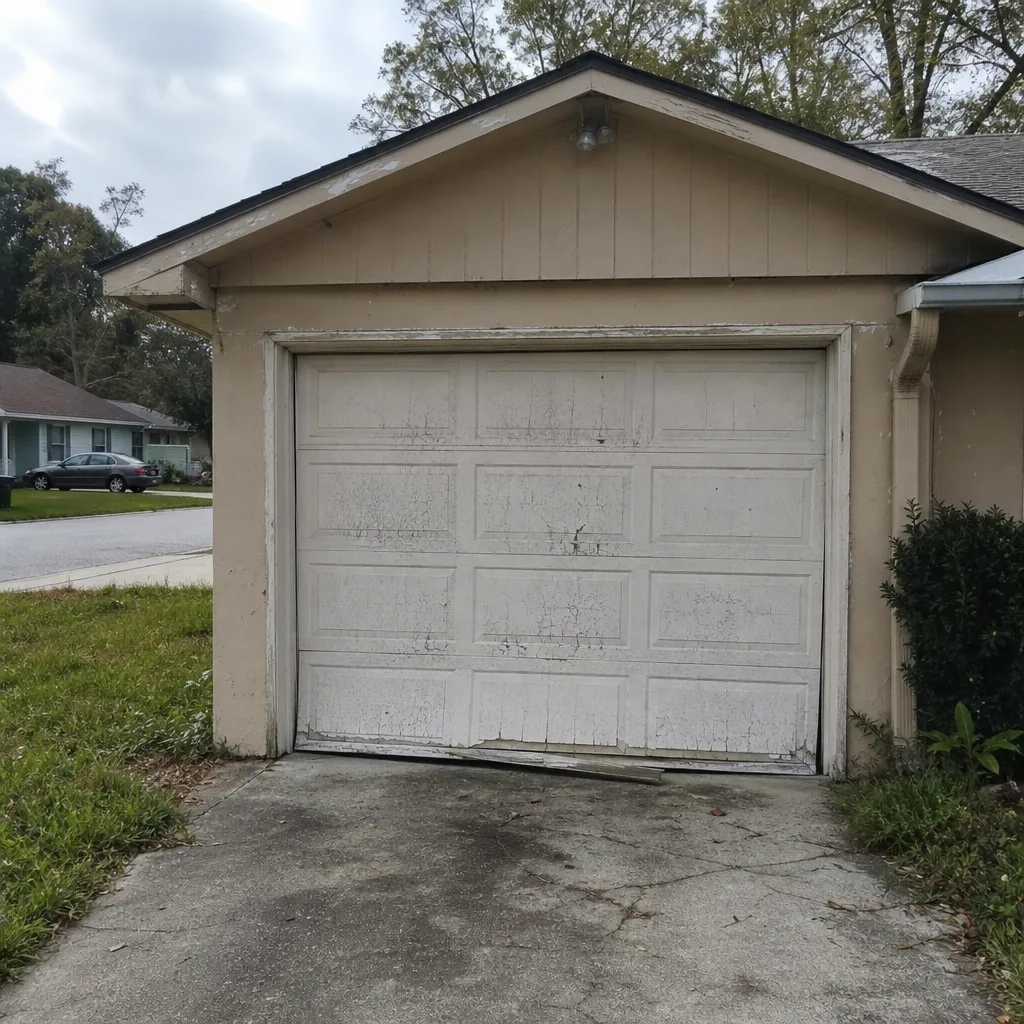 Before
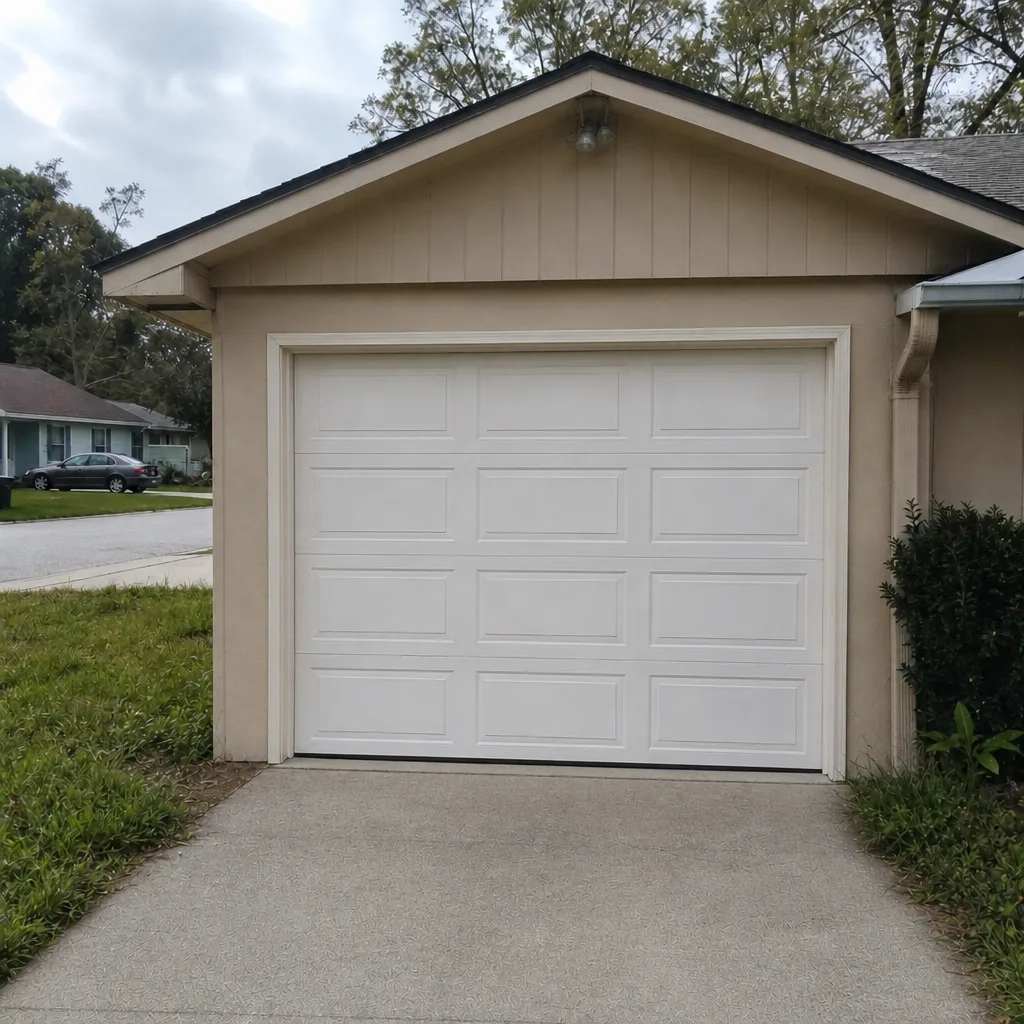 After
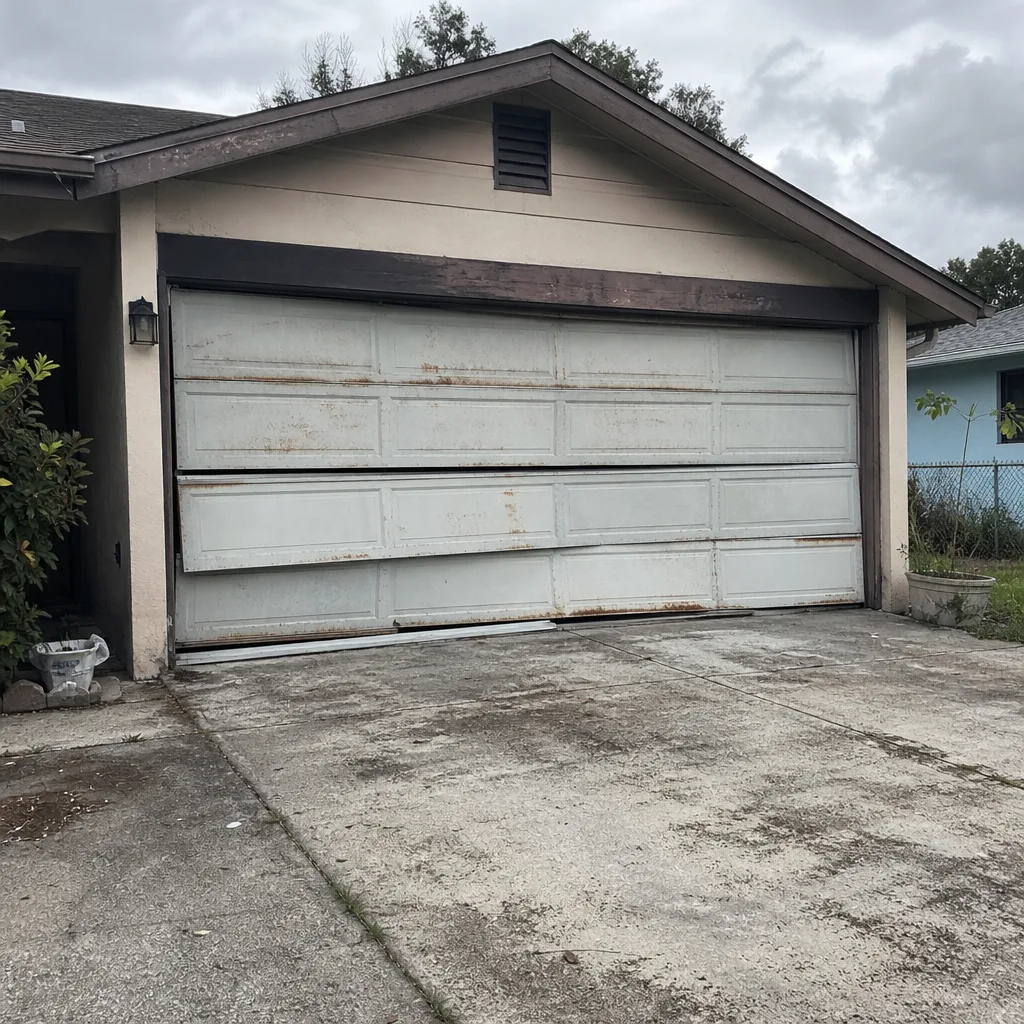 Before
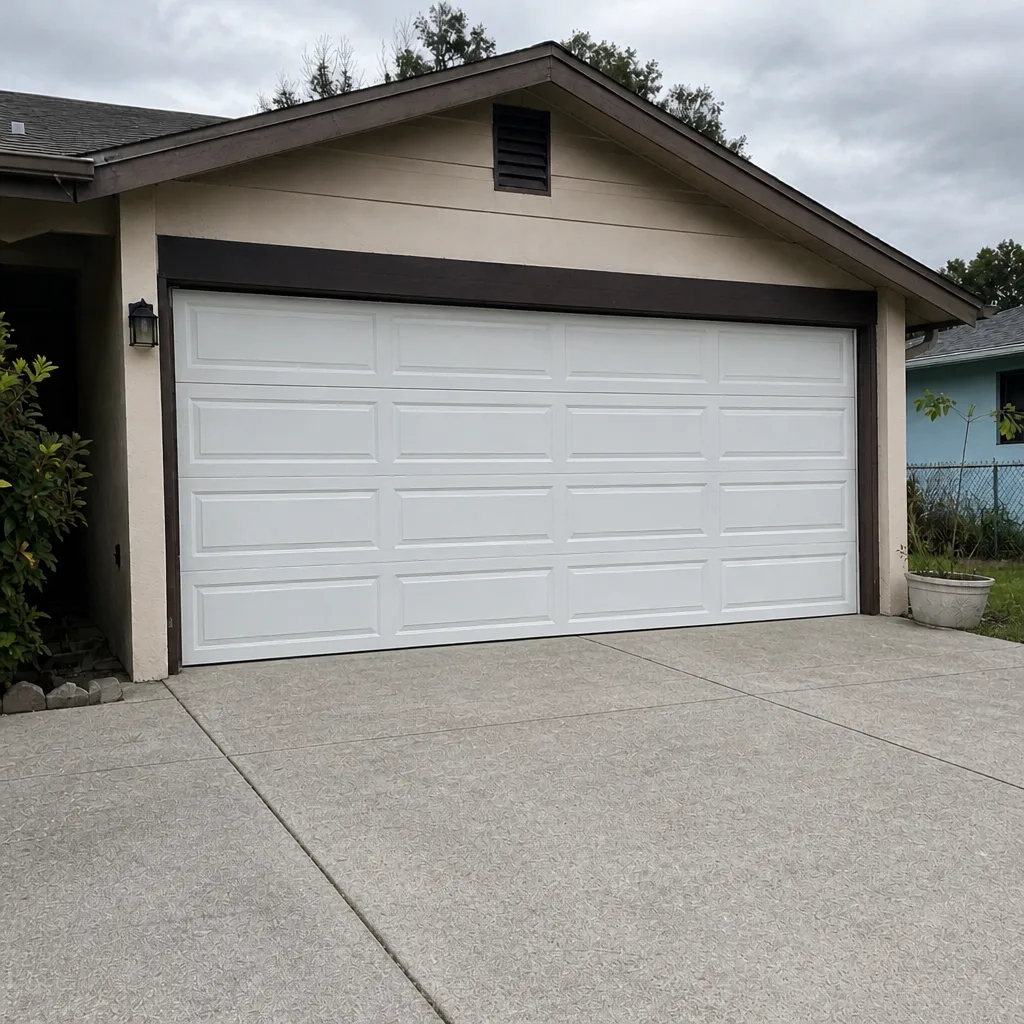 After
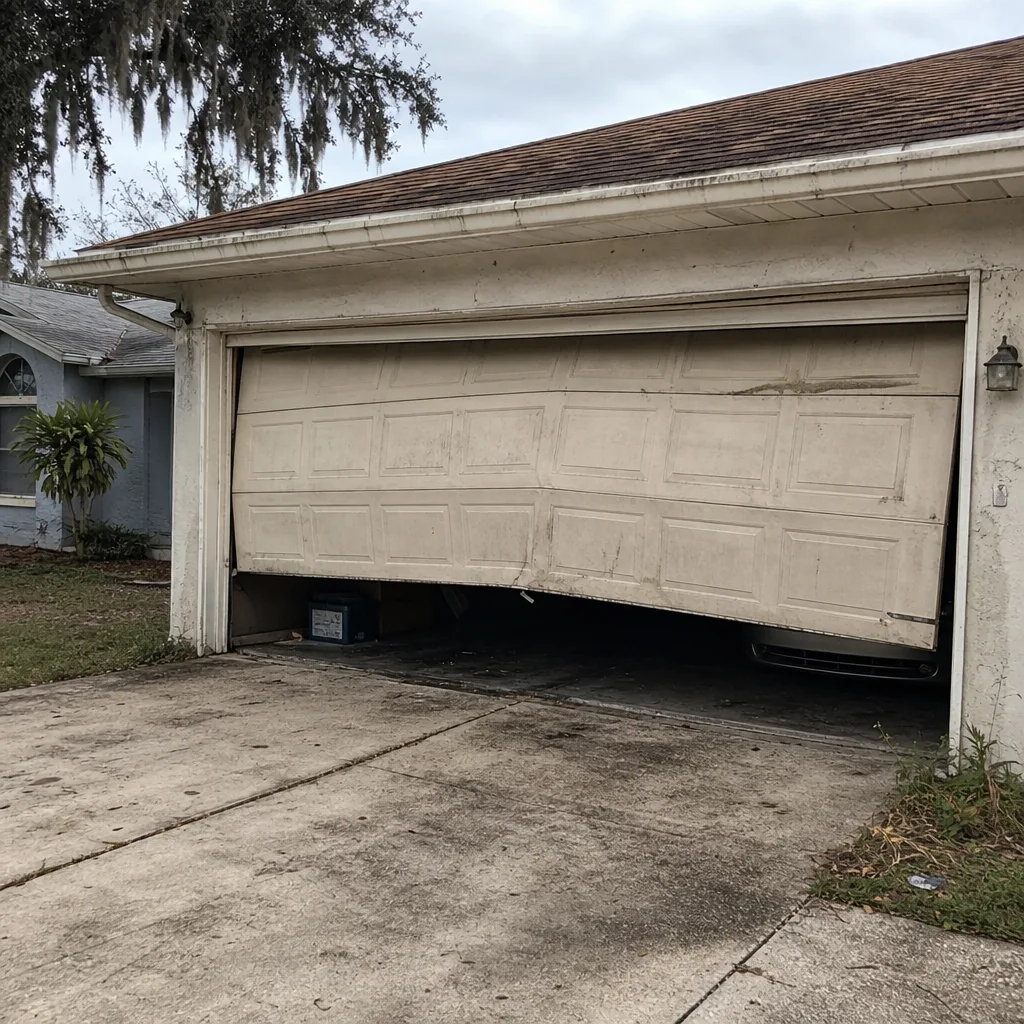 Before
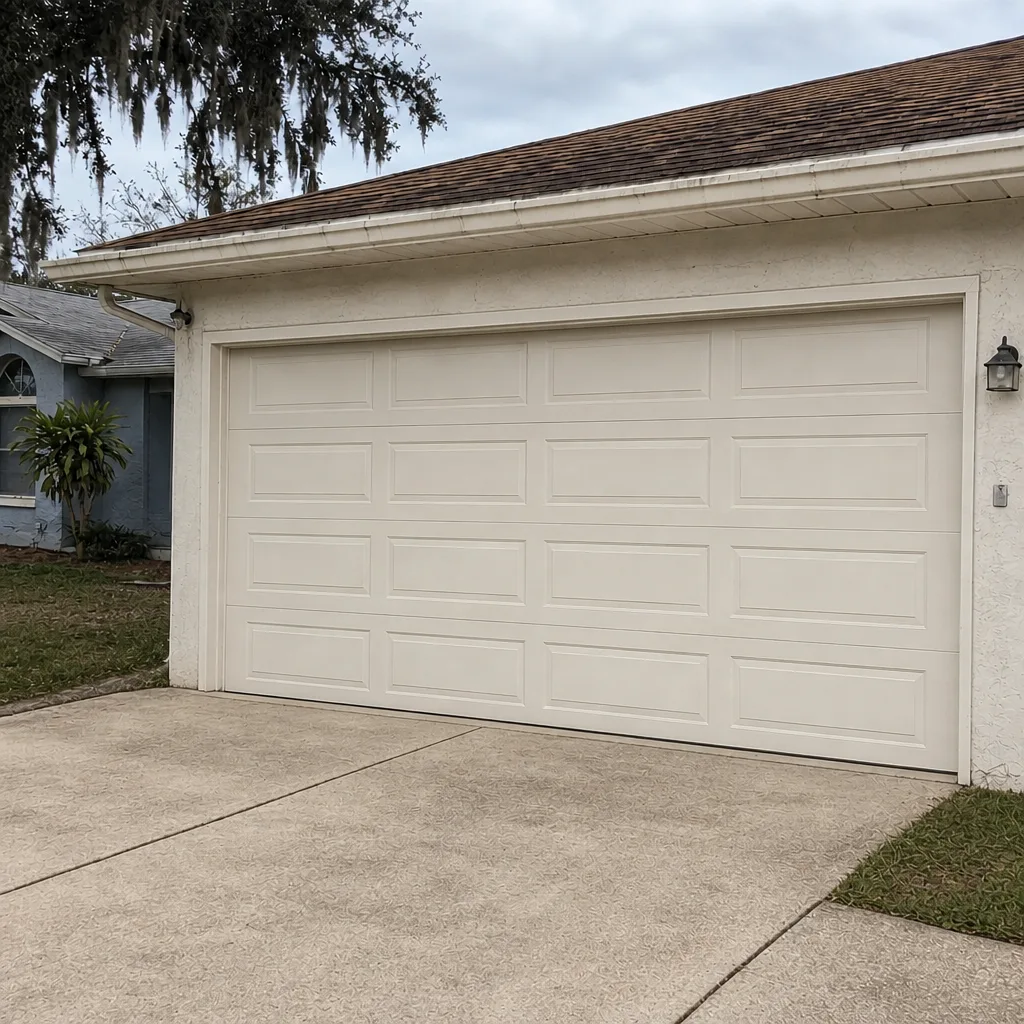 After
When to Call a Professional
Some garage door problems are a heads-up. Others are a today problem. Call a professional when a spring is broken (the door feels heavy, won’t lift more than a few inches, or there’s a loud bang that sounded like a pop), when the door is off-track or stuck open, when the opener runs but doesn’t move the door, when the door slams down or won’t reverse, or when a cable is visibly frayed or hanging. If the door is stuck open at night, that’s an emergency because the house is exposed; if the door is stuck closed, that’s an emergency because the car is trapped. Pine Hills Garage Door Repair Pros offers emergency garage door service and free estimates in Pine Hills, so calling (833) 718-2605 gets you a real conversation, not a call-center queue. Our technicians have up to 11 years of experience, and we work on the brand you already have, whether that’s Amarr, Craftsman, Raynor, or anything else in the widely-owned set. Garage doors are all we do.
Frequently Asked Questions
Spring repair pricing depends on the door’s weight and cycle rating, and a matched pair is usually replaced together, so a pair costs about twice a single-spring price. The written estimate is the final price, and it’s quoted and agreed before any work starts. Call (833) 718-2605 for an exact quote. Estimates are free.
Ask the contractor for their license number, then look it up on the Florida DBPR online license lookup by name or number. It takes about two minutes and shows the license type, status, and any disciplinary history. If the number doesn’t return a current license, don’t hire. The local pro we connect you with is licensed and insured as their state requires.
Yes, emergency garage door service is available for a door stuck open, closed, or off-track. Call (833) 718-2605 and we’ll treat it as the urgent call it is. A stuck door at night is a security issue, so we prioritize it. Estimates are free.
No. The written estimate is the price, and it’s agreed before work starts. If the technician sees something that wasn’t in the original scope, you’ll get a revised written quote and you approve it before anything changes. Call (833) 718-2605 for a free estimate. There’s no surprise invoice after the fact.
The local pro we connect you with is licensed and insured as their state requires, and our technicians have up to 11 years of experience. Ask for the license number and the certificate of insurance at quote time, the same way you would with any contractor in Pine Hills. Call (833) 718-2605 for an exact quote. Estimates are free.
A real specialist should know the brands most Pine Hills doors are actually built on, including LiftMaster, Chamberlain, Genie, Clopay, Amarr, Wayne Dalton, Craftsman, and Raynor. Ask which brands they work on and what opener models they know. If the answer is vague, keep looking. Call (833) 718-2605 for an exact quote. Estimates are free.
The Bottom Line
Hiring a garage door contractor in Pine Hills is a vetting problem, not a search problem. The right move is a short, disciplined sequence: verify the DBPR license and insurance, ask brand-specific questions the generalist can’t answer, insist on a written line-item quote, and slow down when storm-season pressure tells you to speed up. A real specialist talks about spring cycles, headroom, and opener models without hesitation, and stands behind the written price. If a quote is vague or a license doesn’t check out, walk away. If you’d rather start with someone who already specializes, Pine Hills Garage Door Repair Pros is a garage-door-only company, and we work on the brand you already have. Call (833) 718-2605 for a free estimate.
For more on the services connected to this guide, start with Pine Hills Garage Door Repair Pros.
Written by the team at Pine Hills Garage Door Repair Pros.